These dazzling insects come in a rainbow of colors. But don’t be fooled: they’re savage predators who eat tadpoles and even small fish.
by Mike Dunn
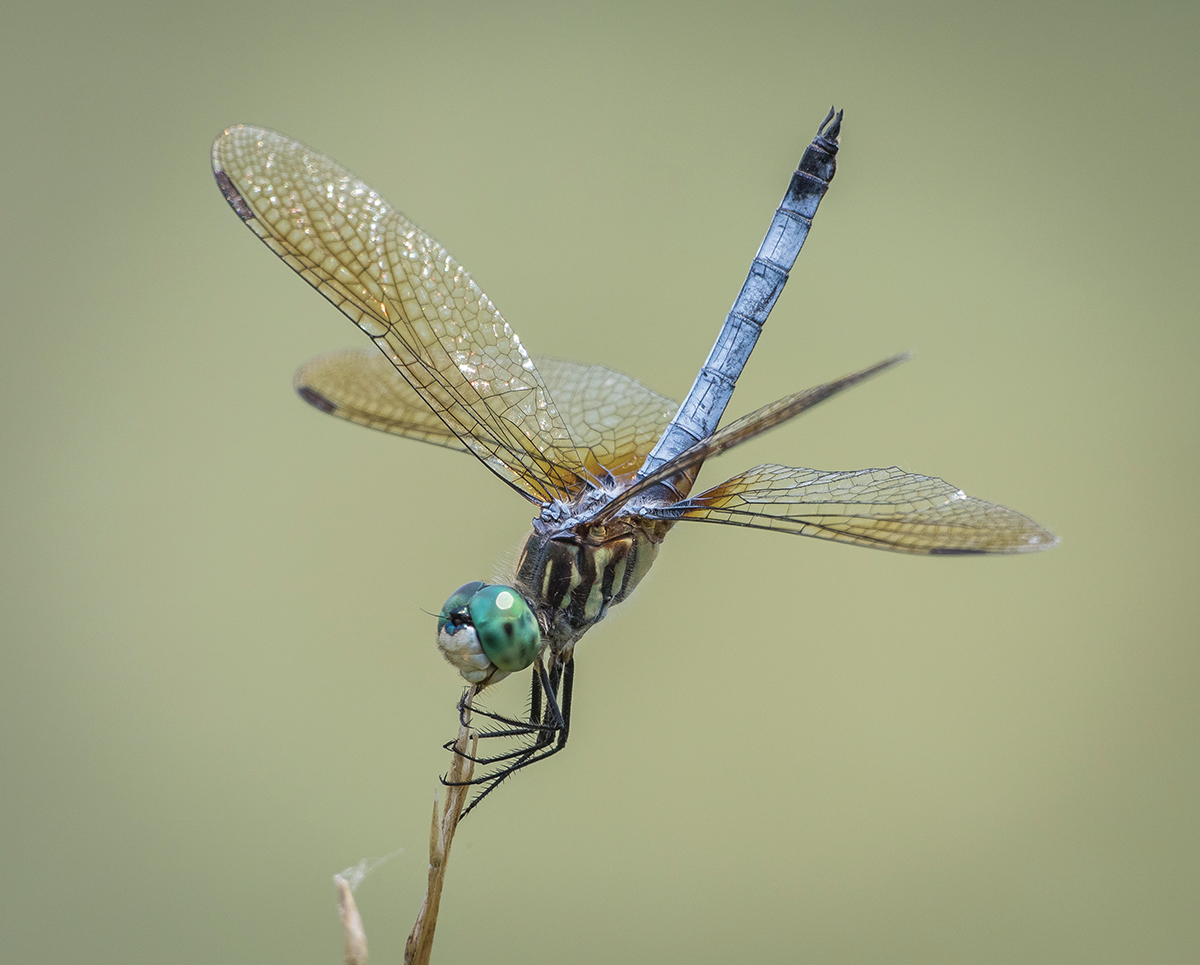
I’ve been fascinated by water since childhood, when my Dad introduced me to fishing. As almost any kid will do, I tended to explore the water’s edge more than I actually fished during our trips. There is so much life to be found around any body of water. As I grew older, I kept returning to aquatic habitats — canoeing, learning to scuba dive in college and doing my graduate studies on aspects of aquatic ecosystems. My career took me to amazing waterways across the state and the world. And almost everywhere I have been where there was a freshwater stream, lake or swamp — or even just a roadside ditch — there has been one group of insects that has garnered my attention: dragonflies.
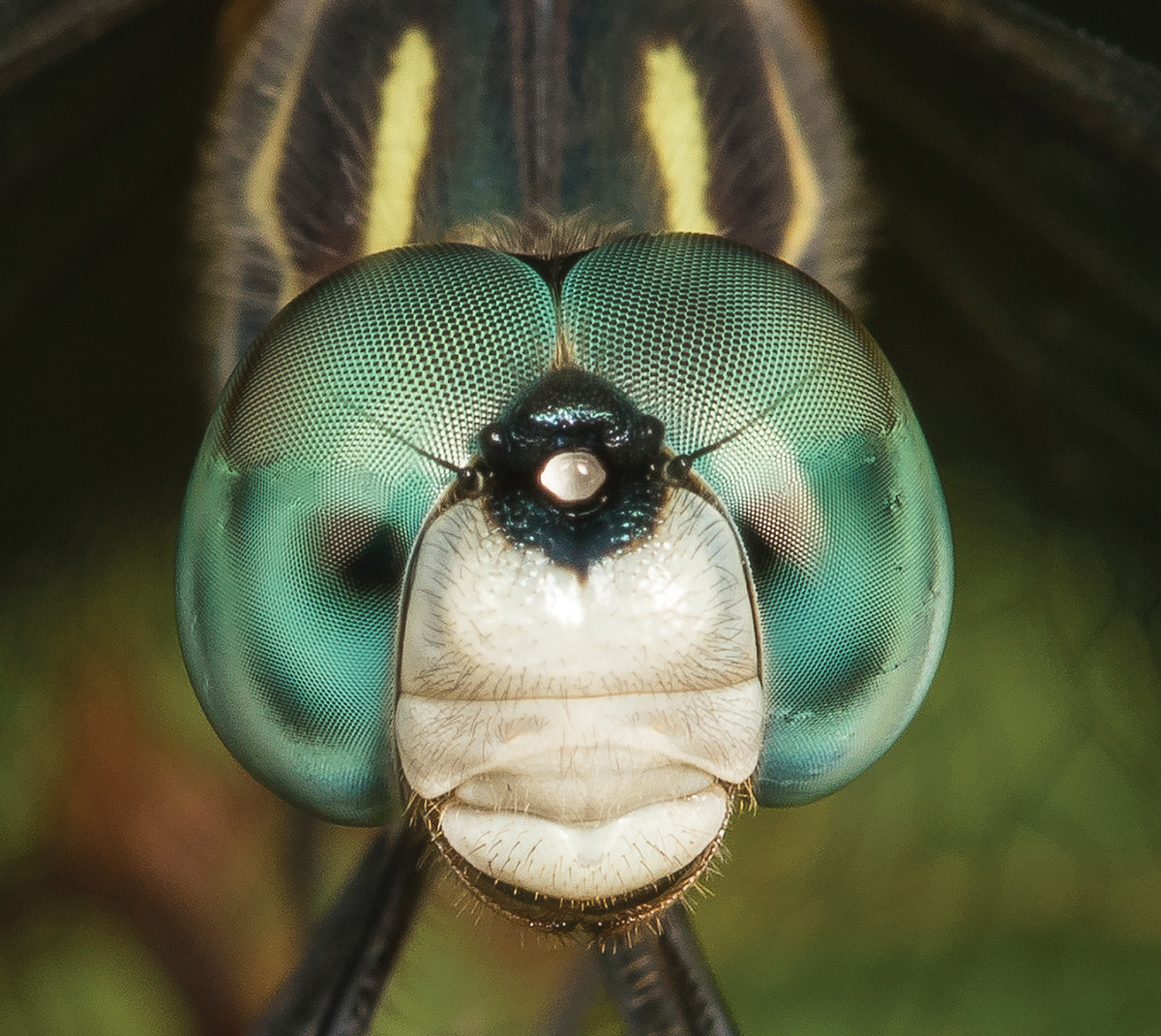
Dragonflies, and their smaller cousins, the damselflies, are members of the insect order Odonata. That name means “toothed jaw” and refers to the serrated mouthparts of the group.

Though you may see them far from any water, all phases of the life cycle of dragonflies are tied to aquatic habitats. The dazzling and flashy adults you see streaking along a pond edge start as eggs that, depending on the species, are laid in water on or in aquatic plants, mud or even a water-soaked log. The time to hatch can vary from a few weeks to months depending on the species and environmental conditions, especially temperature.
Dragonflies spend most of their lives as larvae called nymphs. They are voracious predators on other aquatic critters, from tiny mosquito larvae to larger prey such as tadpoles and even small fish. Nymphs have six legs, small wing buds and an extendable hinged jaw (called a labium). To picture their jaw, imagine yourself as a dragonfly nymph: fold your arms down on your chest with your forearms held tightly together and put your hands against your mouth, fingers interlocked like a serrated jaw. As prey swims close, you extend your arms out (forearms still together) and grab it at a rate faster than a human eye can blink. That is how a dragonfly nymph catches its food.
Back in college, I had a freshwater aquarium in our apartment (thanks to an interesting aquatic entomology class I had taken). I stocked it with some critters from a local pond, including a couple of large dragonfly nymphs, some diving beetles and some tadpoles. I soon noticed I had fewer tadpoles and started paying closer attention. One day I saw one of the big dragonfly nymphs (about 2 inches long) slowly stalk and grab a tadpole with its lightning quick labium. It pulled it in and started tearing it apart with its mandibles — fascinating, but the stuff of tadpole nightmares for sure. My business-major roommate wasn’t thrilled when a huge dragonfly emerged one afternoon and started cruising around the living room.
One other unusual thing about dragonfly nymphs is that they breathe through their bottoms (or more precisely, they have rectal gills located inside their abdomen). Nymphs pump water in and out of their hind end and the gills absorb oxygen from the water. They can also forcefully expel water from their abdomen for a quick getaway via jet propulsion.
Depending on the species and environmental conditions, nymphs remain in the water from a few months to several years. When it is time to transform to a winged adult, the nymph crawls out of the water onto a plant stem or other vertical surface and begins its final molt. The larval skin splits down the back and a winged adult pulls out, remaining in a pale, vulnerable stage called a teneral for an hour or more as its exoskeleton and wings harden.
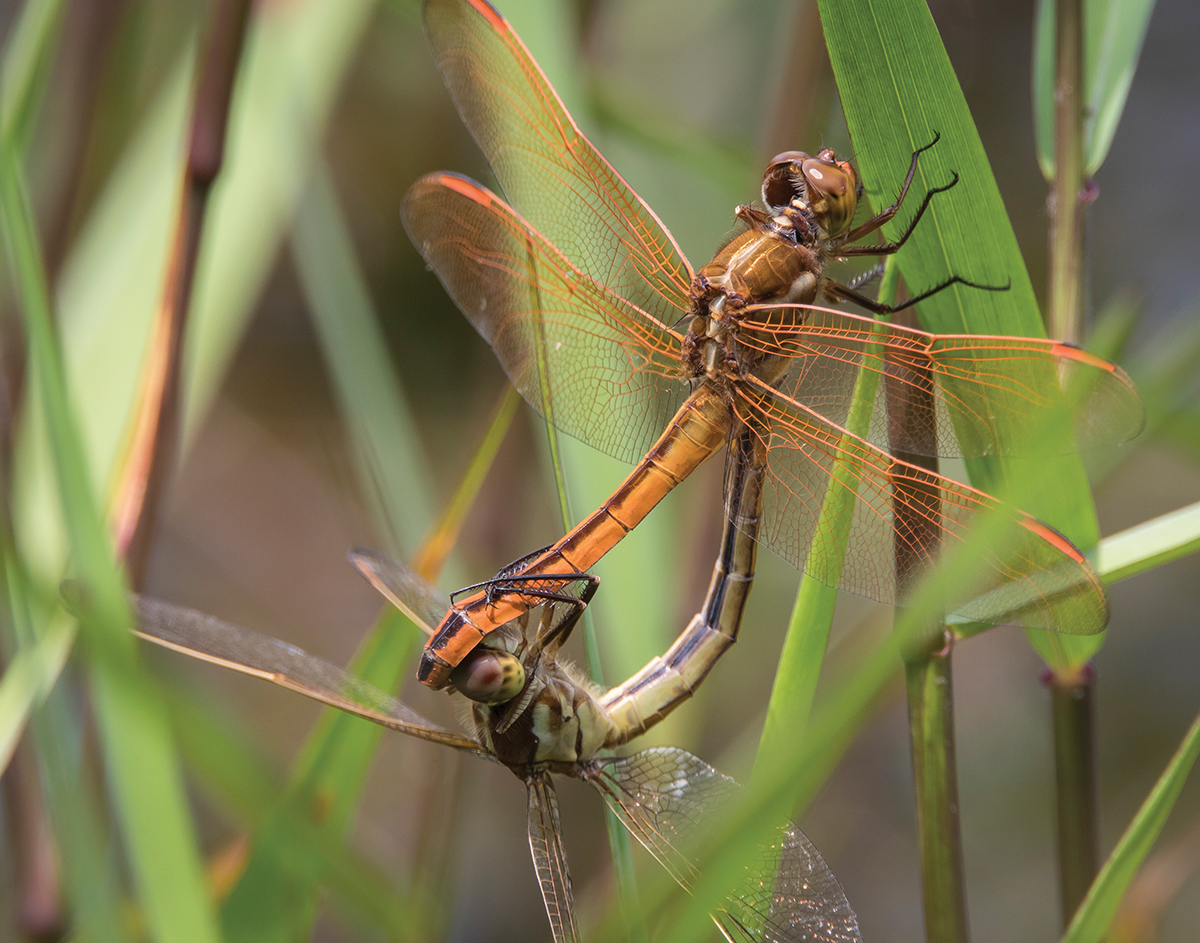
Males establish territories and vigorously defend them from other males. If you sit by the edge of a pond you can see males patrolling back and forth and engaging in “aerial dog fights” with other dragonflies. Females select a mate based on her idea of the most favorable egg-laying habitat. The mating ritual is rather bizarre, with the male grabbing the female behind the head with claspers at the rear of his abdomen. She then curls her abdomen and connects with his abdomen in a so-called “wheel position” to get fertilized. In some species, he stays and guards her while she deposits the eggs for the next generation of dragonflies. Dragonflies are prey for many other animals. Fish, frogs and turtles eat nymphs; spiders, birds, and other dragonflies eat adults.
A few of the 136 species of dragonflies found in North Carolina are migratory. Some, like the Common Green darner, undergo seasonal migrations over a few generations from the southern U.S. and the Caribbean to northern states and back. One species, the Wandering glider, is a global traveler. It is the most widely distributed dragonfly, with records from every continent except Antarctica.
And genetic studies have shown it may be the record-holder for long-distance insect migration, with some individuals migrating over 3,000 miles. This species lays eggs in temporary pools like those formed by rainwater. (Unfortunately, they can be fooled by reflections from a shiny car hood. I had read about this phenomenon and one day witnessed a female tapping its abdomen on the hood of my parked car; I could see the small eggs she had dropped!)
They say the best way to learn something is to teach it. That is definitely true for me. I helped teach a couple of dragonfly and damselfly workshops when I worked at the North Carolina Museum of Natural Sciences. One was held at the pond at the museum’s Prairie Ridge Ecostation. We all had a great time observing and catching Odonates — the latter activity is not an easy task, by the way — and we saw an amazing variety in one afternoon. They are a fascinating and beautiful group of insects, and I encourage you to take a walk along a river or lake this summer and take some time to marvel at these tiny masters of the air.

This article originally appeared in the August 2025 issue of WALTER magazine.