These hardy native shrubs brighten North Carolina fall gardens with edible purple fruit — perfect for beautyberry jam or syrup
By Helen Yoest
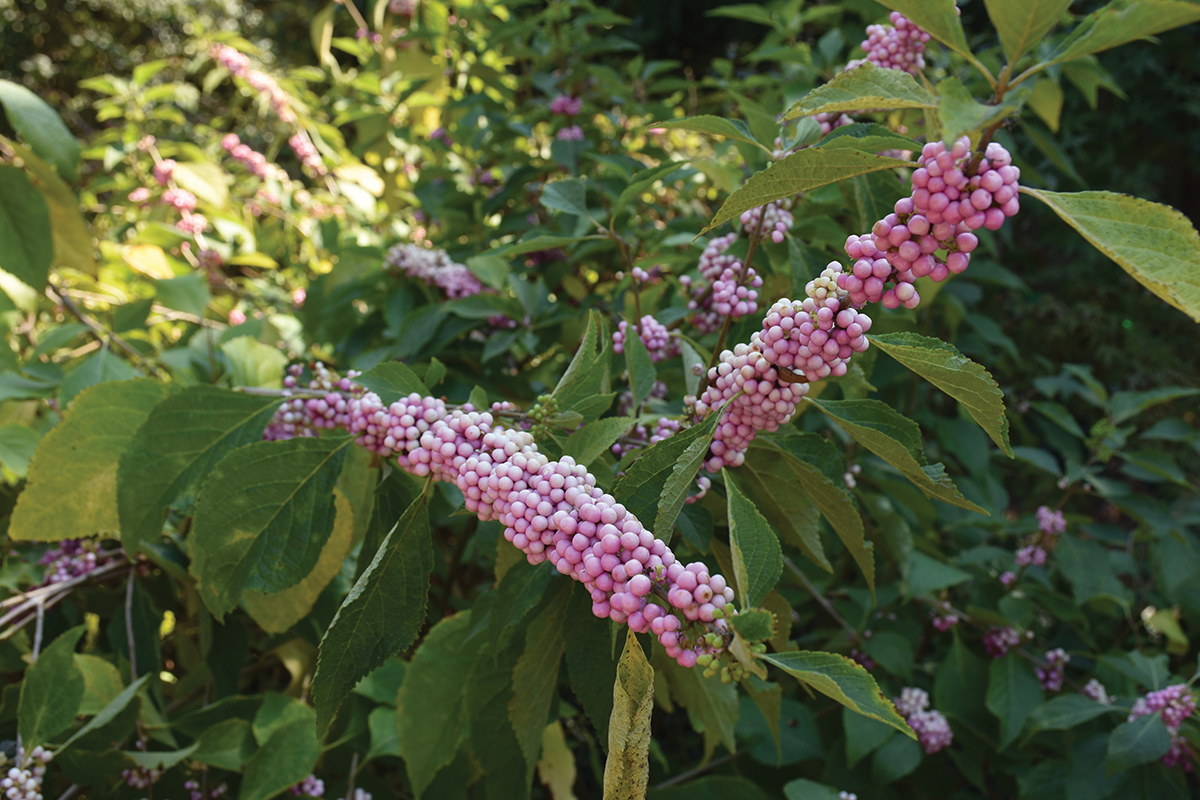
About 10 years ago, I wrote a book called Good Berry, Bad Berry. As the name suggests, the book identified foraged berries that won’t make you ill or kill you — and the ones that might. I also included a section called “Good Berry, Bad Idea,” about the Goldilocks berries that need to be just right before they’re good to eat.
Most people are surprised to learn that the American beautyberry (Callicarpa americana) is one of the “good” berries. Taste a berry straight from the bush and you’ll find it astringent, puckering your mouth. But cooked into a jam or syrup, beautyberries are a treat! The flavor is often compared to a strawberry jam with hints of rose.
No fall garden should be without this shrub — in addition to tasting good, they’re called beautyberries for a reason, with dense clusters of fruit along their stems and copious green leaves. They also do well in a vase. Here are three of my favorites:
Callicarpa americana var. purpurea You’ll know these are ripe when the berries shift from green to magenta, starting in late summer and reaching full vibrancy by September and October. I grow one in my orchard bed. They can get as wide as they are tall, at 3 to 6 feet.
Callicarpa americana ‘Alba’ Also known as white beautyberry, since the berries are white rather than purple, these are great for brightening distant beds or adding texture in white gardens. I grow mine in the back of my yard, where it’s easily seen from my back porch.
Callicarpa americana ‘Welch’s Pink’ I’ve only ever seen this beautyberry at the JC Raulston Arboretum, but I love it. As the cultivar name suggests, these berries are a pale pink, named for plantsman Matt Welch (not, as I once thought, for Welch’s grape juice).
Plant beautyberry shrubs in partial shade to full sun, in well-drained, rich soil. Since beautyberry produces fruit exclusively on new wood, it’s best to cut branches back to the ground in late winter.

This article originally appeared in the October 2026 issue of WALTER Magazine.