These popular shore birds are beautiful to watch at local lakes and beaches as they slowly hunt their prey and build elaborate nests
words and photographs by Mike Dunn
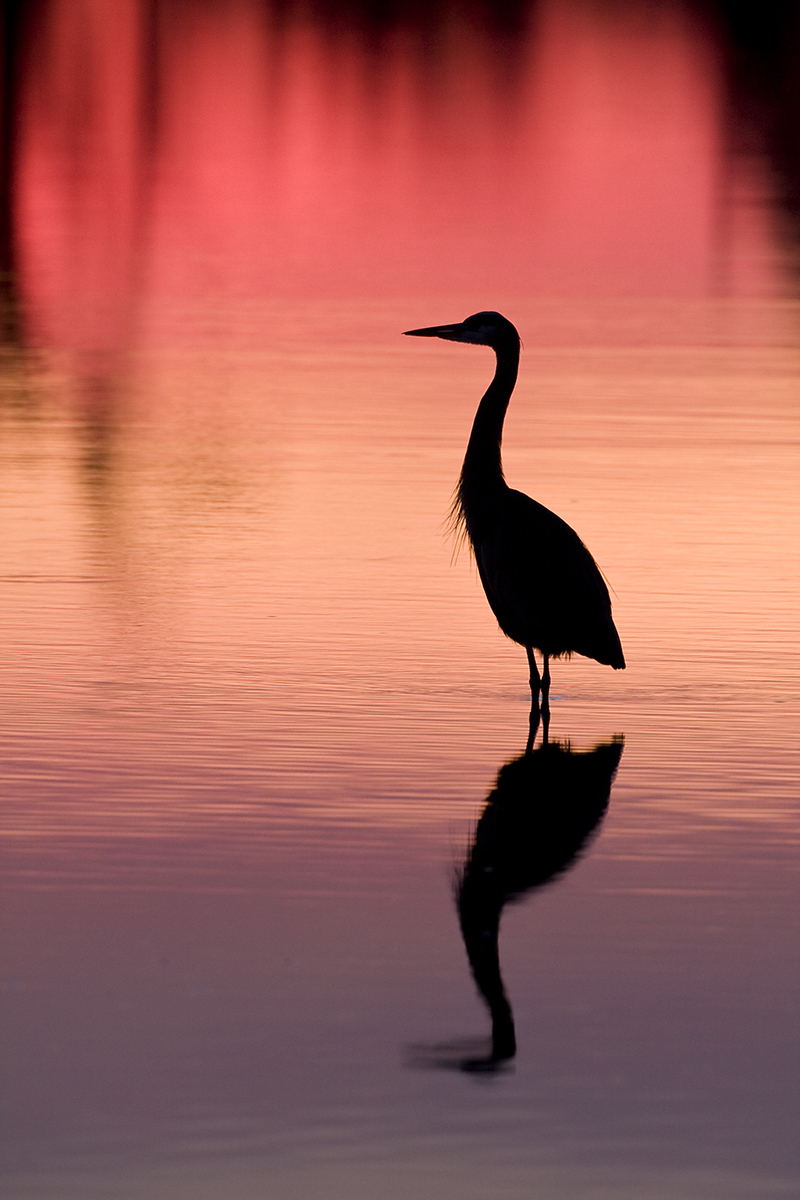
I admire herons. They have a stately posture and steely eyes that can stare down anything, and, to me, they epitomize patience. The great blue heron is one of the most widespread wading birds in North America. It is also the largest of our herons, standing 4 ½ feet tall with a wingspan of over 6 feet. I see them on most visits to our wildlife refuges and on any trip to local reservoirs like Jordan and Falls Lakes, standing erect or slowly walking along the water’s edge, eyes alert, ready to strike with precision.
If I move too quickly or get too close, they clumsily erupt into the air with slow strong wingbeats while uttering a loud frawnk. When that happens, the other nearby wildlife is on high alert, as the great blue heron is one of the most vigilant birds in their habitat. A friend once gifted me a heron decoy to use as a calming influence on other birds when doing wildlife photography — the idea being that if they see a heron standing there, things must be safe.
This time of year, herons are busy feeding their young in treetop nests in places like Jordan Lake. They typically nest in colonies in swamps and other protected locations in groups of tens to even hundreds of birds. Nests are large stick structures that are often used year after year. Eggs and nestlings can fall victim to raiding mammals like raccoons or birds like crows and hawks, but these young birds are now almost as big as their parents. They do a lot of squawking when food is brought back to the nest, but are rarely preyed upon given their size and dagger-like beak.
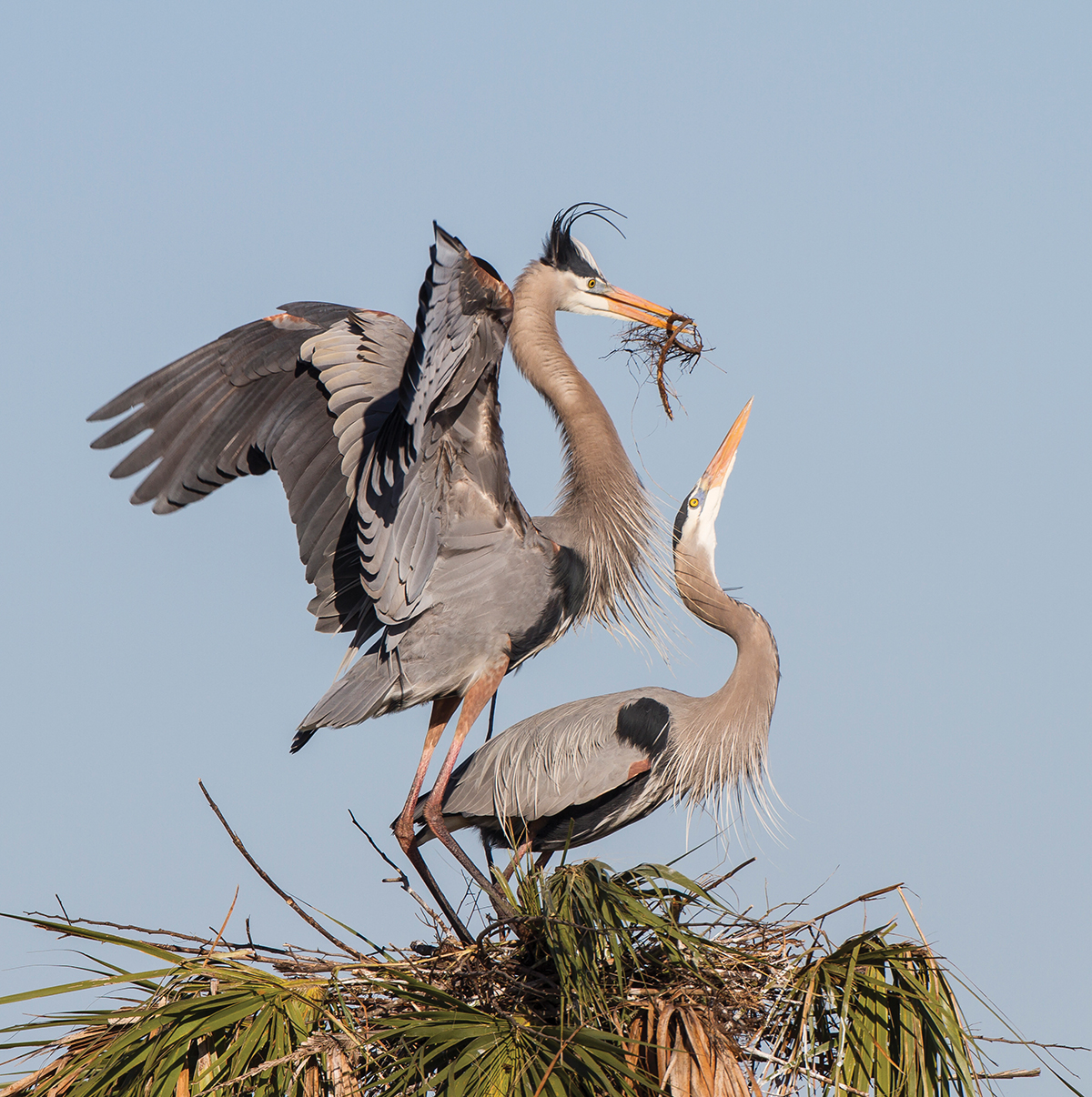
I was able to watch some nest-building one year in Florida. Instead of building in dead trees, like I see around here, the herons there used the tops of palm trees. The herons were sitting quietly on their nests early in the day, but as the sun got higher the male flew off and began collecting sticks. He would drop down to a broken branch lying on the ground and inspect it before twisting off a section and flying back to the nest. (Occasionally, a male would go to an unoccupied nest and steal a stick to take back to his mate.)
Once the male landed, he would present the stick to the female and she would accept it. Sometimes, she would simply pluck the stick from him, without standing up, and carefully place it in the nest. Other times, there was more ceremony involved, with both birds stretching and pointing their bills skyward before she accepted the stick — must have been a really good one! He would then fly off for another. (Not sure what happens if she doesn’t like a stick.)
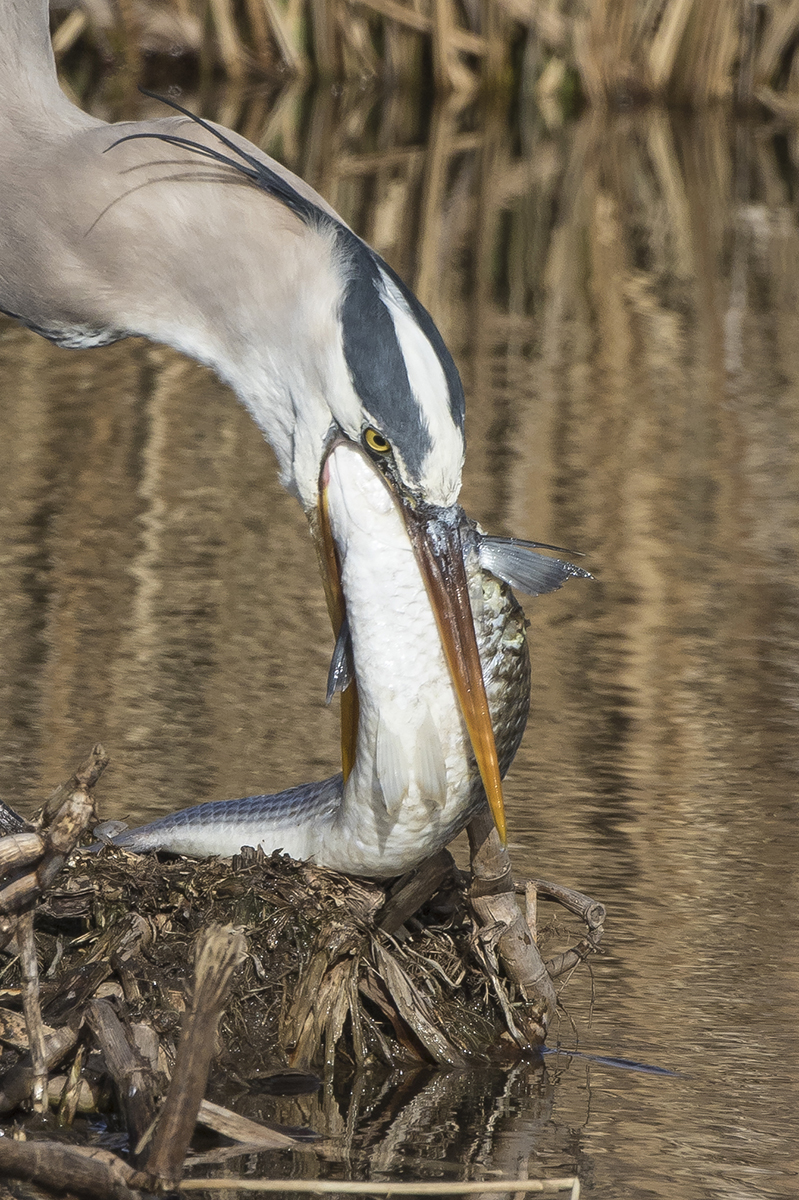
If you ever get a chance, you should watch a heron hunt. They are masters of stealth and diligence as they move ever-so-slowly, eyes trained on the prize. Look for the lightning-fast thrust of the neck and head as they stab with their long bills. Though they primarily eat fish, herons are opportunists and will take anything they can swallow, including amphibians, insects, birds, snakes and even small mammals. I often see one hunting in fields in winter, presumably after mice, voles or other small rodents.
My all-time favorite great blue heron encounter happened one winter at Mattamuskeet National Wildlife Refuge. There is a mud bank in a canal just inside the main entrance where you can frequently find a heron standing in the marsh grass. Herons in that spot have probably been photographed by hundreds of people over the years, including me.
On this particular morning, there was something else on the mud: a very large mullet! I wondered if this was a dream come true for the heron — because it was a dream come true for me! I had always wanted to see a heron catch and swallow a huge fish, and here it was.
All of us in the car stared in amazement as the bird tried to grab the still-flopping fish. It was a lot to get a beak around. The heron worked at grabbing the fish, then dropped it, finally using its stiletto beak in a series of quick jabs to try to subdue the mullet. (It sometimes took a few shakes to get the fish off.)
After several bouts of spearing the fish, the mullet stopped moving. But the fish was still a challenge. A typical adult great blue heron only weighs about 5 pounds. I estimated this fish to be about 14 inches long, weighing in at 1 pound — one-fifth the weight of the bird. That’d be like me trying to gulp down a 40-pound hamburger!
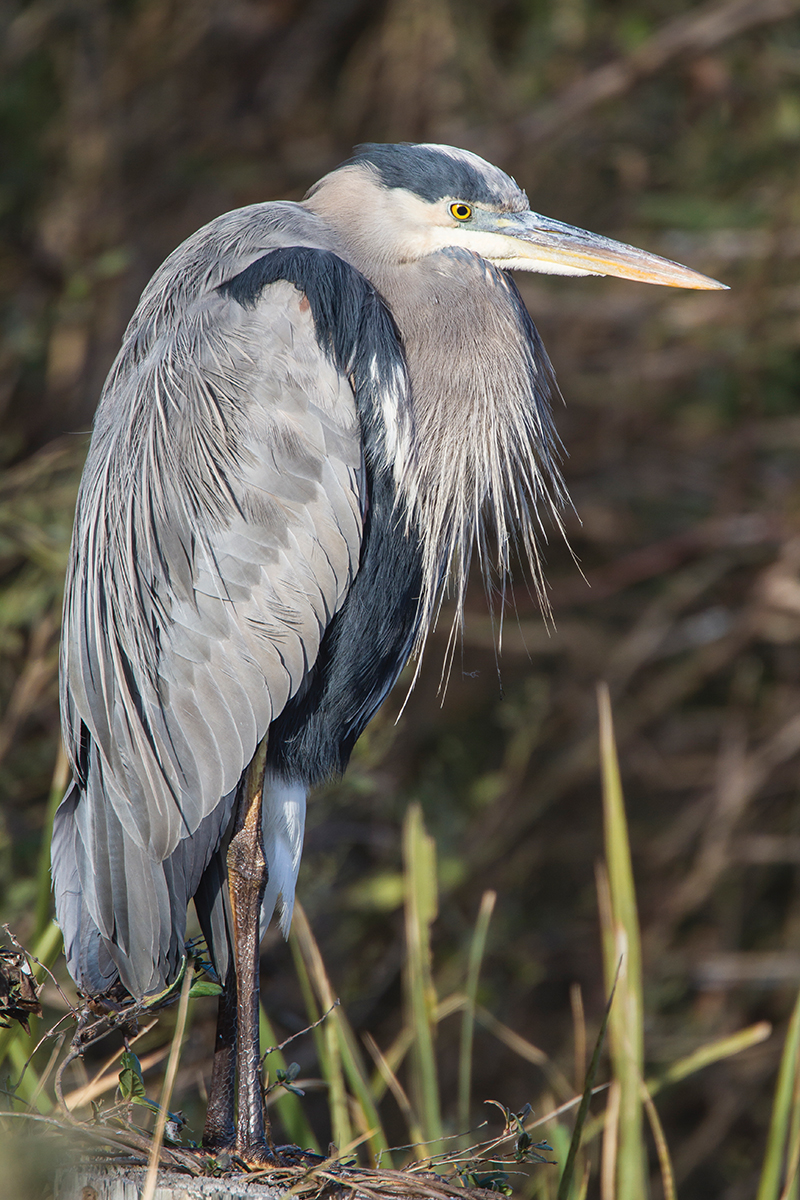
We watched the struggle for about 20 minutes and reluctantly decided to head off to see some other areas of the refuge. When we came back about an hour and a half later, the heron was still at it. While we were gone, the heron seemed to have figured out a better strategy for lifting the fish, and came oh-so-close to swallowing it a couple of times.
But the heron was starting to tire. It took longer breaks between feeding attempts, and the proud bird twice turned its back and caught tiny fish and gulped them down.
We watched a little longer, but it was getting late and time to go home. The heron had been at this for at least two hours — and we had been watching the struggle, camera shutters firing away — but there was no end in sight. I hated to leave without knowing whether the heron realized its dream. But I guess I had achieved mine, even though I didn’t witness a successful end to the story.
Perhaps the important thing, for both heron and human, is to dream in the first place.

This article originally appeared in the July 2026 issue of WALTER magazine.