Antlions — also known as doodlebugs — are quirky, ferocious larvae hiding in your North Carolina backyard
Words and photography by Mike Dunn
When I was a kid, we had an annual tradition of watching the 1939 film The Wizard of Oz. Parts of it were a bit scary to me as a child (especially those flying monkeys!), but one line from the film stuck in my head: “lions and tigers and bears, oh my!” It’s what Dorothy, the Scarecrow and the Tin Man chanted as they moved through the dark woods to ease their fear of the unknown in the forest.
Did you know that we all may have lions and tigers and bears close to where we live, if not in our very own yards? That’s right — but they are not to be feared.
Your neighborhood lions, tigers and bears are tiny members of the invertebrate community that live throughout much of North Carolina. Bears come in the form of woolly bear caterpillars, those moth larvae made famous for their supposed powers in predicting the severity of our winters. There are also water bears, or tardigrades, which are loveable microscopic creatures found in moist habitats like mosses and lichens. Our local tigers, or rather, tiger beetles, are a group of predaceous insects that you may see along dirt paths or on logs in sunny spots in the woods. Also, ironically, the woolly bear caterpillar turns into a type of tiger — a tiger moth.
But can you find lions in your yard? You can if you have some loose soil under the eaves of your house or under a picnic table, or anywhere else that gets some protection from rain. Look closely and you may notice small pits in loose soil. Typically, they are about 2 inches across and an inch or more deep and shaped like an inverted cone. The architects of these tiny depressions are antlions — sometimes called doodlebugs — predatory larvae that dig these pits as a sand trap for the small insects on which they feed (like ants). They are fearsome-looking creatures (but harmless to us humans) whose behavior and likeness have inspired the creation of monsters in movies like Star Trek II: The Wrath of Khan and Star Wars: Return of the Jedi, among others.
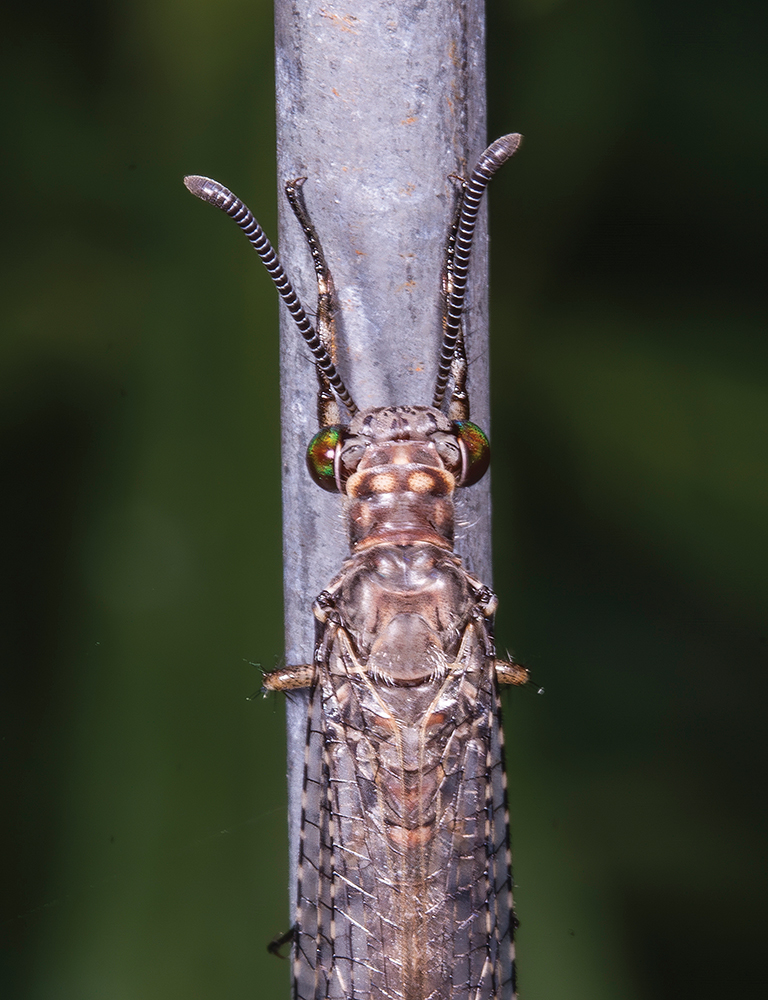
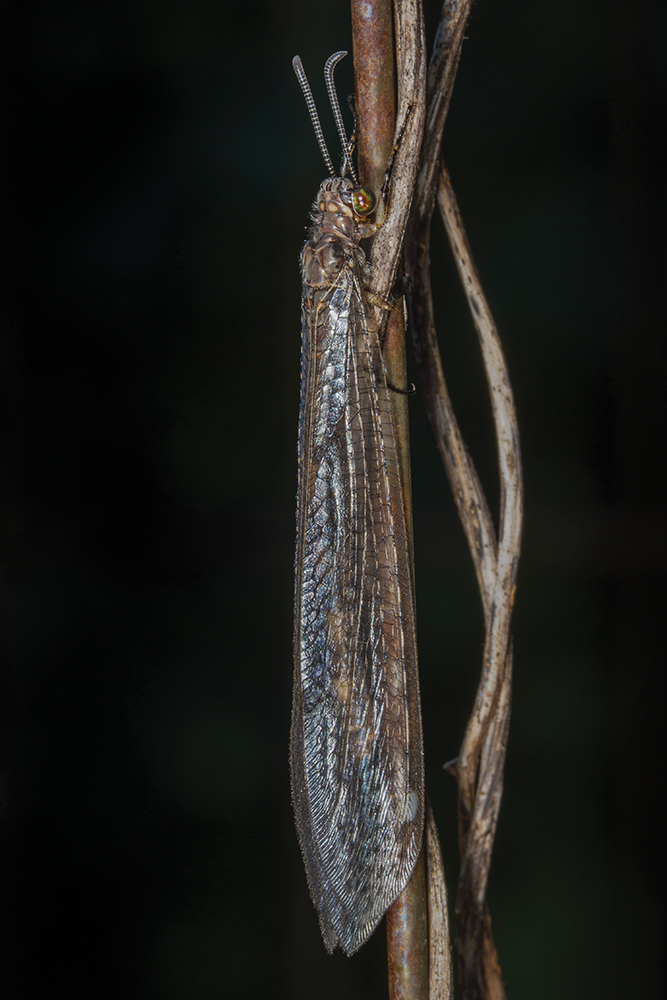
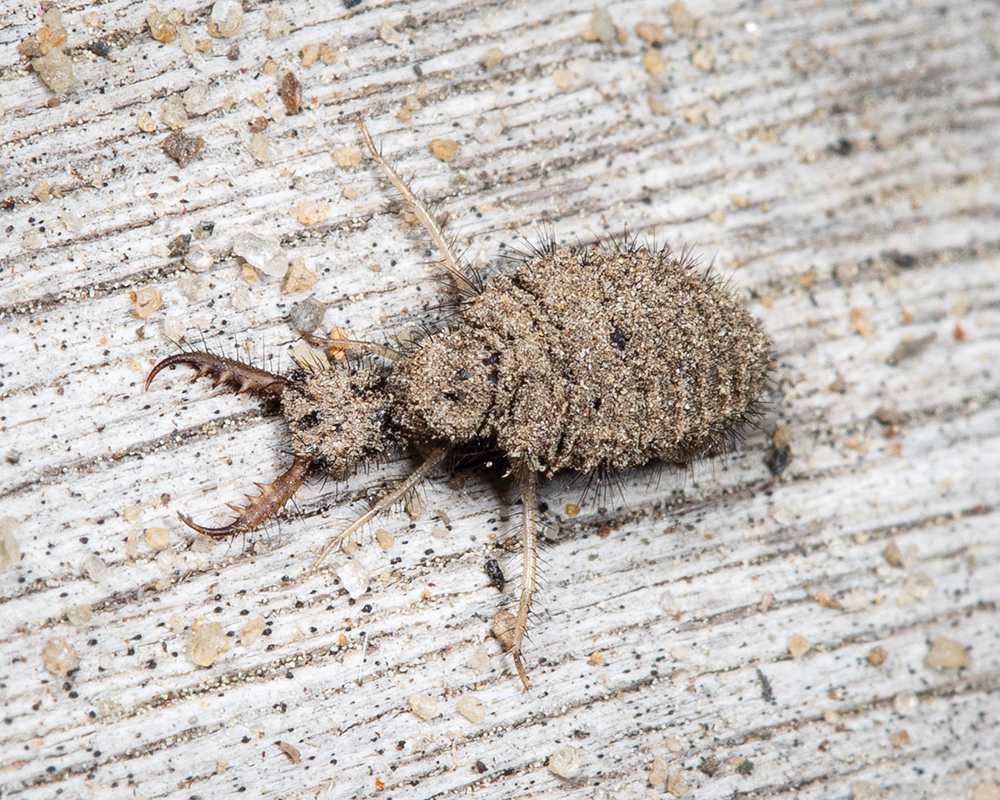
Antlion larvae have a small (1/2-inch) plump brown body covered in hairs that point backward. But what stands out is the huge set of sickle-shaped jaws on the head, which can be a third of their body length. Antlions start out as eggs laid in dry powdery soil by a winged adult that looks much like a damselfly (but with thick knobbed antennae, which a damselfly adult lacks). Adult antlions also differ from damselflies in that they are primarily nocturnal; are weak, somewhat clumsy fliers; and, when at rest, fold their wings over their back. You rarely see adult antlions except when they occasionally come to lights at night.
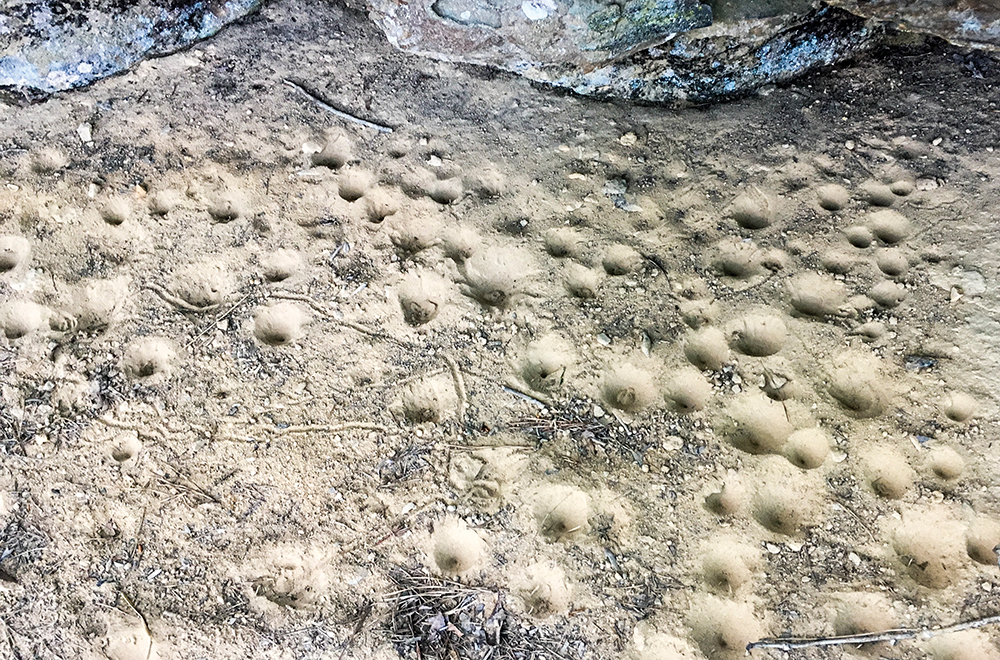
After hatching, antlion larvae go about the business of finding a spot for their sand trap by crawling backwards across the soil surface. They leave behind a trail in the sand that looks like someone doodling on a page. This has given rise to another common name for these larvae — doodlebugs. You may have heard children trying to lure an antlion out of its pit by reciting some variation of an old mountain saying my folks taught me: “Doodlebug, doodlebug, fly away home, your house is on fire and your children are gone.” That never worked for me, but I did learn you could easily scoop up an antlion larva with a spoon to take a closer look. When you put the antlion back on the soil, they hurriedly move backwards (leaving a doodle) and then dig into the sand to disappear.
An antlion can create a new pit in about 20 minutes. They spiral backwards and downwards, throwing sand grains away with their head. They selectively remove the larger soil particles, leaving fine particles which settle at a critical angle of somewhere between 35 and 45 degrees — the angle of repose, as it’s called. This is the maximum stable slope for dry sand, and it collapses if an ant or other small insect steps into the pit, causing the sand to slide down and the ant along with it. I learned what this is like when I worked for state parks and tried to climb the steep slopes of Jockey’s Ridge on the Outer Banks. Those dunes are also at the angle of repose, and it seems that for each step you take, you seem to slide right back down.
The voracious larva is buried at the bottom of the pit awaiting its quarry, with only its huge jaws exposed. If the ant is struggling trying to climb out, the antlion will flick sand grains at it with its jaws, creating a tiny landslide that will bring the prey closer. Once it grabs the ant, the antlion injects venom to dissolve some of the insides of the prey and then sucks up the juices through hollow channels in its jaws. Once it has drained its victim, it tosses the body out over the rim of the pit and waits for its next meal. (Sounds like a sci-fi monster to me.)
Antlion larvae can survive long periods without food and, oddly, they don’t poop! Everything gets stored internally for the one to three years they are a larva and is expelled once they emerge from their pupal case. I once found a pupal case buried in the sand on Jockey’s Ridge. It resembled an insect disco ball and was made up of a mixture of silk and sand grains. The adults emerge after a few weeks as pupae. Adults mate and die within a few weeks.
You have to admire these little beasts. The larvae have inspired myths, legends and sci-fi monsters, and they create artwork by doodling in the sand as they wander backwards through the world. If you want to know more, there is a wonderful website called antlionpit.com with all sorts of information on these cute little critters, from natural history to folklore, and even some lesson plans for teachers.

This article first appeared in the August 2026 issue of WALTER Magazine.