In 2026, we’re celebrating 50 years of Raleigh’s greenway — which is more than 100 miles long — and honoring the man who championed it
By Matt Lail | Photography by Geoff Wood
Call it a coincidence — or perhaps just serendipity — but as the United States was celebrating its 200th birthday in 1976, something revolutionary was unfolding in Raleigh.
That April, the official master plan of the Capital Area Greenway System was presented, eventually changing not only the way the people of Raleigh get around, but also how the city grows, protects its natural resources and serves its residents.
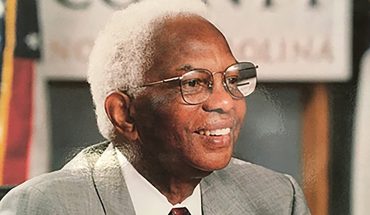
Bill Flournoy has been nicknamed the “Father of the Greenway System” for good reason. A Raleigh native, his vision for conservation was spurred by the development (and subsequent flooding) of Crabtree Valley, according to Kate Dixon, a close friend and the first executive director of the Triangle Land Conservancy, an organization Flournoy helped found. After junior college at Gardner-Webb, Flournoy returned home to study forestry at North Carolina State University before pursuing landscape architecture at NC State’s School of Design.
It was Flournoy’s master’s thesis, The Benefits, Potential, and a Methodology for Establishing the Capital City Greenway, that became the genesis of the Capital Area Greenway System. Turning it into a concrete plan for an interconnected network of paved and unpaved trails reaching every corner of the region certainly didn’t happen overnight. Flournoy worked meticulously with power brokers at the city, county and state levels. Land had to be acquired, after all, and there were often long, tedious discussions about easements and rights of way. “But Bill was always the most knowledgeable person in the room when it came to conservation and policy, and he had an uncanny ability to galvanize people and organizations to act on his ideas,” Dixon says.
Flournoy, who no longer does interviews, is described by friends and colleagues as a “gentle soul” or even a “very gentle soul” — but he can be stubborn when he needs to be. “Bill’s a pretty deliberate and soft-spoken guy,” says Jim Hallsey, a longtime friend who’s spent many hours hiking, camping and canoeing with Flournoy. (The duo even completed some 450 miles of the Appalachian Trail together in the 1970s and 1980s.) “He probably worked more behind the scenes than any of us realized. But he’s very passionate about his interests.”
Chief among those interests is conservation. Flournoy had the foresight to realize that tremendous growth was coming to the capital city, whether we wanted it or not. And if that growth wasn’t controlled, who knew what would become of his beloved hometown?
Flournoy’s original greenway vision was much more than a network of bike and pedestrian arteries. “He’d always say, ‘Trails are just one part of it,’” Dixon says. “It was important to him that we were protecting this land for many different ecological and environmental reasons, beyond the recreational side of it.” His greenway plan would go on to protect some 3,700 acres of land throughout the city, an impressive number that sets Raleigh apart.
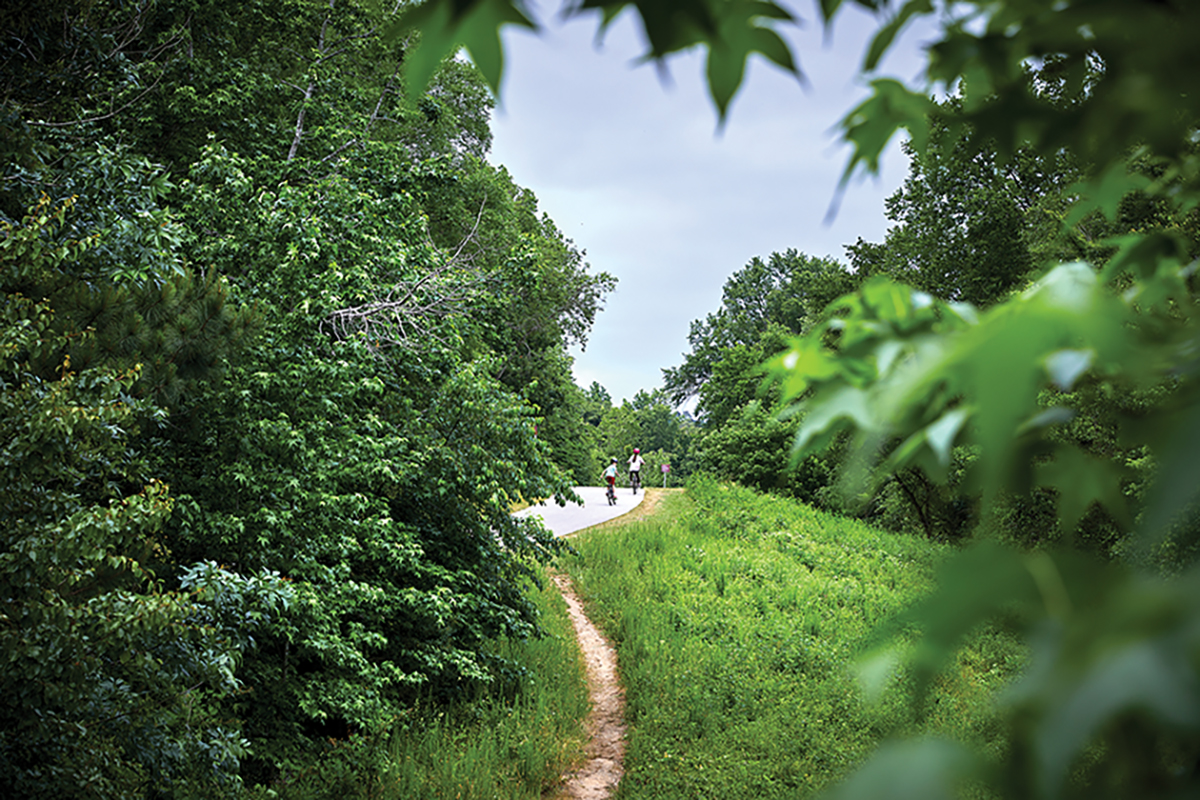
Today, the Capital Area Greenway System boasts more than 100 miles of trails that wind through wetlands, forests, neighborhoods and more, with branches that reach all parts of the city — and beyond. “You can walk to the end of East Street and then decide to run, hike or bike to Falls Lake or even to the outskirts of Clayton,” says Darrow Johnson, a longtime friend and neighbor of Flournoy’s in Historic Oakwood. (Johnson recalls Flournoy’s living room bookshelves, haphazardly stacked with books about urban planning, public policy, conservation and nature; Flournoy eventually donated his personal library to his alma mater.)
The greenway is widely recognized for its balance of conservation and recreation, and hosts a number of bike rides, runs, nature walks and even history events each year. Mayor Janet Cowell proclaimed Oct. 3-9 “Raleigh Greenways Week,” acknowledging that over 50 years, the system has become an important part of life here, “reflecting the City’s longstanding commitment to connecting people, places and nature.”
Even in recent years, and despite declining health, Flournoy still serves as the greenway’s chief caretaker. According to Johnson, he sometimes will adopt a section of trail as a pet project. No matter the weather or time of year, he’ll trudge a mile or so with an ax, a machete or other tools to clear non-native and invasive species from the edge of the path, making sure it’s accessible to all. “He is going to find a way to make it better,” Johnson says.
As this special feature of our city turns 50, it’s important to remember the part it plays in our daily lives, hosting everyone from couples taking evening strolls to children learning to fish along its waterways to commuters biking to and from work. As the city continues to grow and more people call Raleigh home, the greenway remains a source of pride — and a resource that needs protecting. We have Bill Flournoy to thank for all of it. “It’s pretty incredible,” Johnson says, “that something that started as a graduate thesis has now become a true fixture of Raleigh that many of us take for granted.”

This article originally appeared in the December 2026 issue of WALTER Magazine.