Goldenrods are a native plant in North Carolina that are low-maintenance and beautiful, and provide critical nutrients for pollinators
by Helen Yoest
Come September, our schedules get busy again — but don’t neglect your fall-blooming flowers! They are vital for pollinators because they provide essential nectar and protein-rich pollen after the summer flowers fade.
A favorite of mine, and one I feel is grossly underused, is goldenrod (Solidago spp.). Goldenrods get a bad rap because they are often mistaken for ragweed (Ambrosia artemisiifolia), a common trigger of seasonal allergies. Each of these genera blooms around the same time, but don’t blame the goldenrod!
Migrating insects, such as Monarch butterflies, need nectar-rich flowers to fuel their long journey back to Mexico. Non-migrating insects, such as our native bumblebee, need fuel too. Each year, a young queen mates and leaves her birth colony to generate a new colony the following spring. But before she can begin hibernation, she needs to build up the critical fat and energy reserves for winter survival. Goldenrods are a great source of this energy and require very little work from us. Three of my favorites:
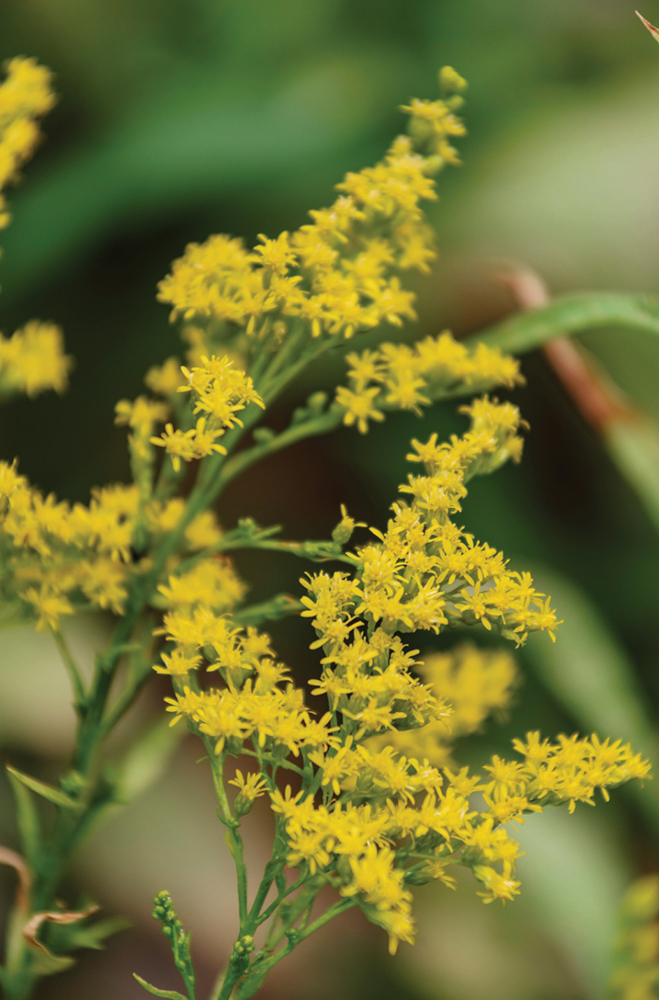
Wrinkleleaf goldenrod ‘Fireworks’ cultivar (Solidago rugosa) blooms abundantly in September, with arching sprays of golden flowers reaching up to 4 feet tall. Plant in full sun to light shade and moist to wet soils.
Showy goldenrod (Solidago speciosa) features dense, wand-like clusters of yellow flowers and blooms well into late fall. Also growing up to 4 feet tall, it has upright stems bearing long rods of golden-yellow flowers. Showy goldenrod tolerates drought and clay soil and will naturalize in a landscape.
Bluestem goldenrod (Solidago caesia) prefers woodland edges. It’s a shorter species, only reaching 3 feet tall, and features yellow flower clusters hugging greenish-
purple stems through early fall. Plant in partial shade.
For each of these, removing spent flowers encourages more bloom, and thus a longer flowering period to provide nectar and pollen.

This article was originally published in the September 2026 issue of WALTER Magazine.