Don’t be frightened by ghost crabs, devil’s walking stick or witches’ broom — these North Carolina natives aren’t as scary as they sound
Words and photographs by Mike Dunn
October is a beautiful month in North Carolina, one of my favorites. The air has a crispness and is finally cooling off; it’s the start of fall leaf color, and our fall wildflowers are gorgeous in their yellows and purples on the landscape. But, as you (and especially your children) know, it is also the month of Halloween, that celebration of costumes and scary decorations.
As a naturalist, I happened to notice we have several plants and animals here in NC that have scary-sounding names—among them ghosts, witches, screams, haunted houses, demons, devils, blood, and so much more. I have written about a few of these creepy-sounding species in past articles, including the so-called Halloween or pumpkin spider (marbled orb weaver), a spring wildflower called bloodroot, the hickory-horned devil caterpillar, and my favorite scary natural phenomenon, zombie fungi. But there are more out there, so here’s a look at some other eerie natural history names from the mountains to the coast.
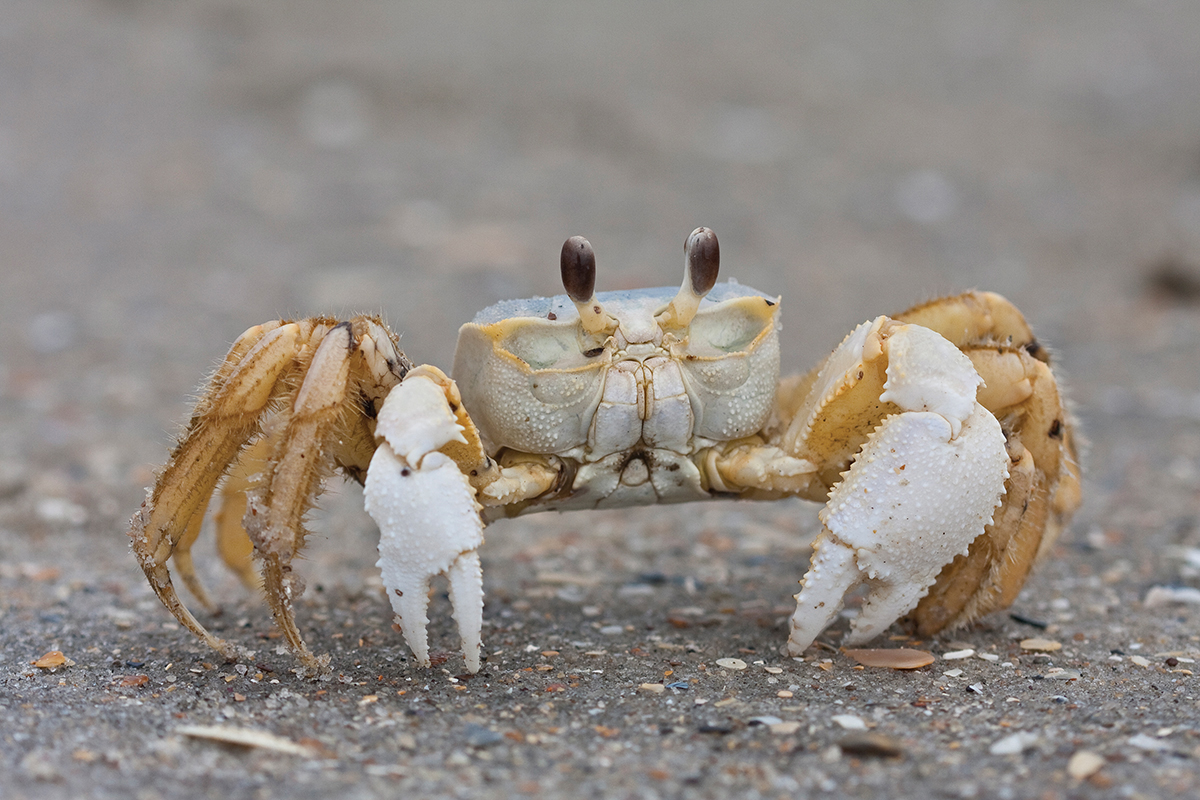
Let’s start with the word “ghost.” The first species that comes to mind is the beach-dwelling ghost crab. These pale-colored crustaceans live on dead plants and animals that wash up on the shore. They are also voracious predators of insects, beach invertebrates (like mole crabs and coquina clams), and even the eggs and hatchlings of sea turtles. You may see one out on the beach during the day, but they can dart into a hole in the sand with incredible speed. In fact, their genus name, Ocypode, means “swift-footed.” But to really see how many ghost crabs are out there, you need to walk on the beach at night, as they are primarily nocturnal. On some beaches you may see dozens of scurrying, ghost-like creatures with eyes on stalks above their gray shells… scary indeed.
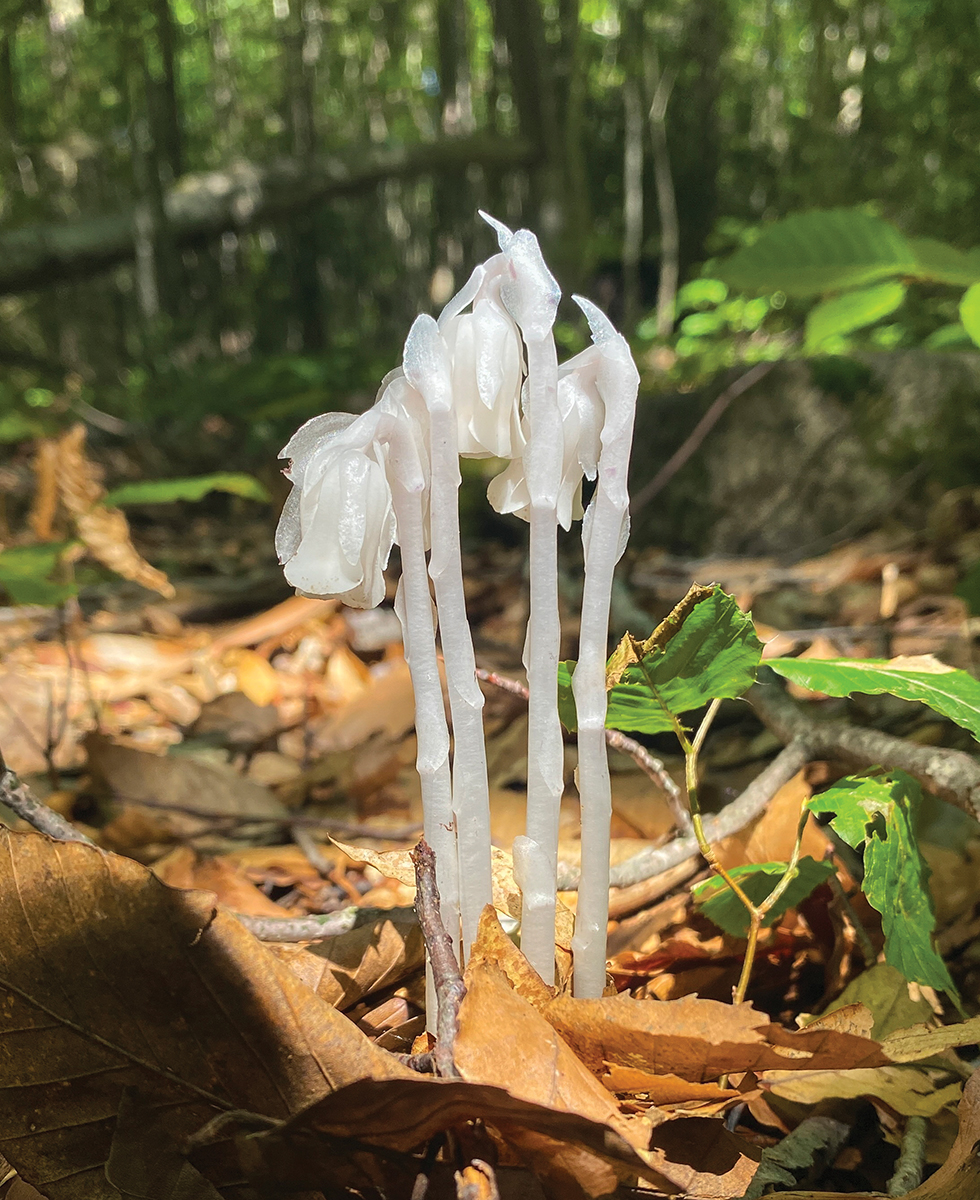
Another North Carolina ghost can be found on hikes in our Chatham County woods and other forested habitats. The ghost plant is translucent white, with a nodding flower at the end of a stalk. It often grows in small clumps in deep shade. This plant goes by other names, such as Indian pipe (due to its resemblance to Native American peace pipes) and corpse plant (another scary-sounding moniker). Often mistaken for a fungus, the ghost plant lacks chlorophyll and therefore cannot photosynthesize. It is instead parasitic on mycorrhizal fungi in the soil. These fungi have a cooperative relationship with the roots of forest trees: the trees produce sugars and other carbohydrates, and the fungi provide minerals and water from the soil. The ghost plant steals nutrients from the mycorrhiza.
Oddly, the ghost plant is in the same family as azaleas and rhododendrons, with which it often shares rich soil habitats. Its pale color seems a bit spooky, but even more so is the way that, if picked, it turns black. If you’re a fan of Emily Dickinson, you might be surprised to learn that the ghost plant was the poet’s favorite wildflower; she described it as “the preferred flower of life.” Her first book of poems, published posthumously, has this flower on the cover.
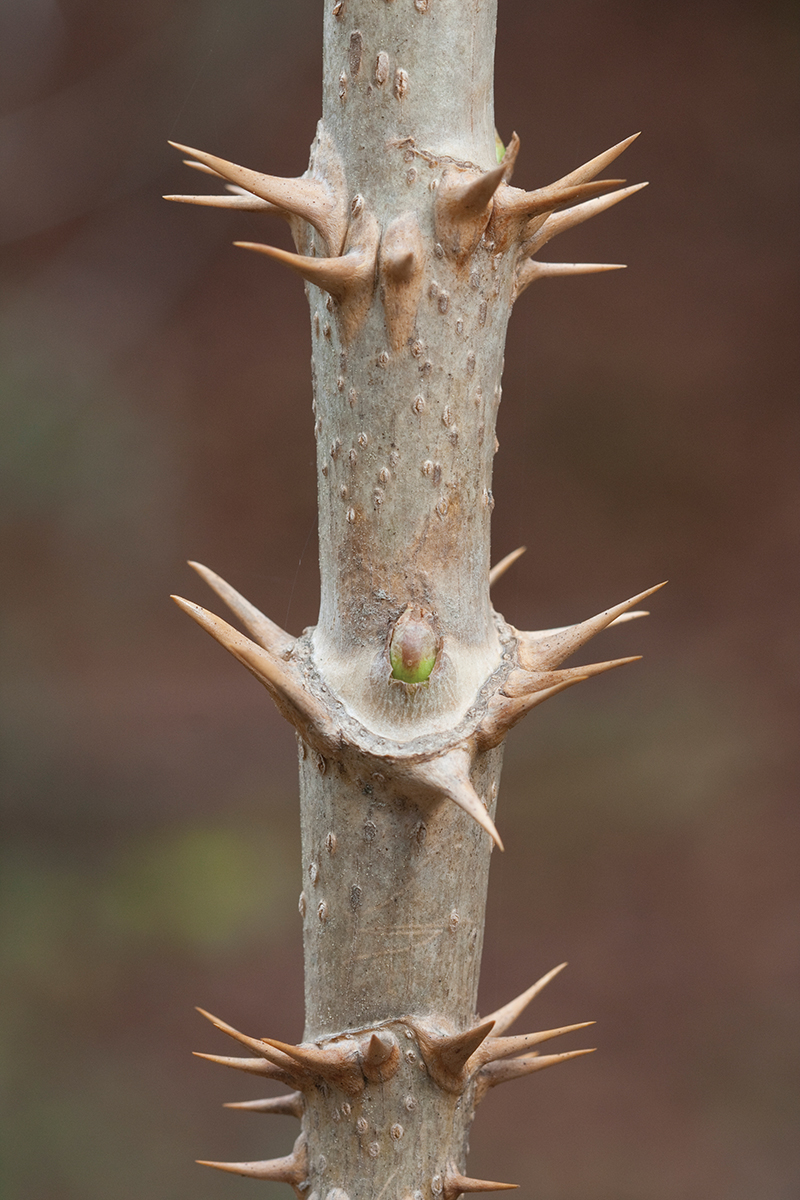
Another icon of Halloween is the devil. Turns out, we have an aptly named “devil” growing in our woods: devil’s walking stick. It is a small tree that often forms thickets. Exercise caution when walking through a patch of these trees, as you don’t want to grab one if you start to lose your balance! The young stems are stout and so might be tempting to grab, but they are also covered in sharp spines.
Though it has a fearsome name and appearance, the image of devil’s walking stick is softened by the pollinators and birds that flock to its blooms. The large clusters of creamy-white flowers are a favorite of bees, wasps, and butterflies. Its dark purplish berries are produced in abundance and consumed by a variety of birds and other wildlife. A favorite tidbit of mine is that the compound leaves of devil’s walking stick are the largest leaves of any plant in North America, reaching lengths of over 3 to 5 feet!
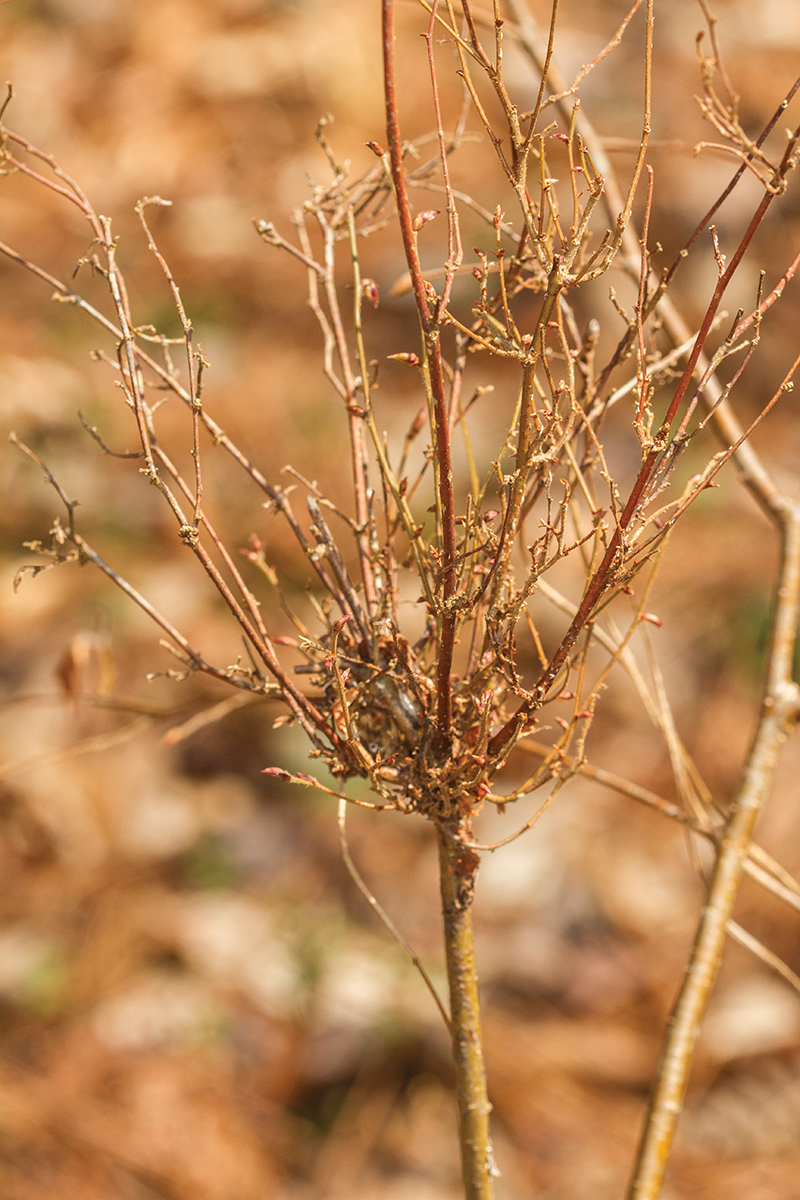
Perhaps the most recognizable symbol of Halloween is the witch. We have a strange plant phenomenon in our woods named witch’s broom. I see it most often on our property growing on the branches of American hornbeam, though it can occur in a number of tree species. It is a dense tangle of small twigs growing from a single point that resembles an old frayed broom (or perhaps even the scraggly hair of a witch). Witch’s broom can be caused by a number of factors, such as a fungus (the likely causative agent on our hornbeam trees), a virus, or mites. The infection alters the growth hormones at the site and creates the tight-growing cluster of twigs. In winter, they are noticeable as irregular-shaped dense blobs on the tree branches.
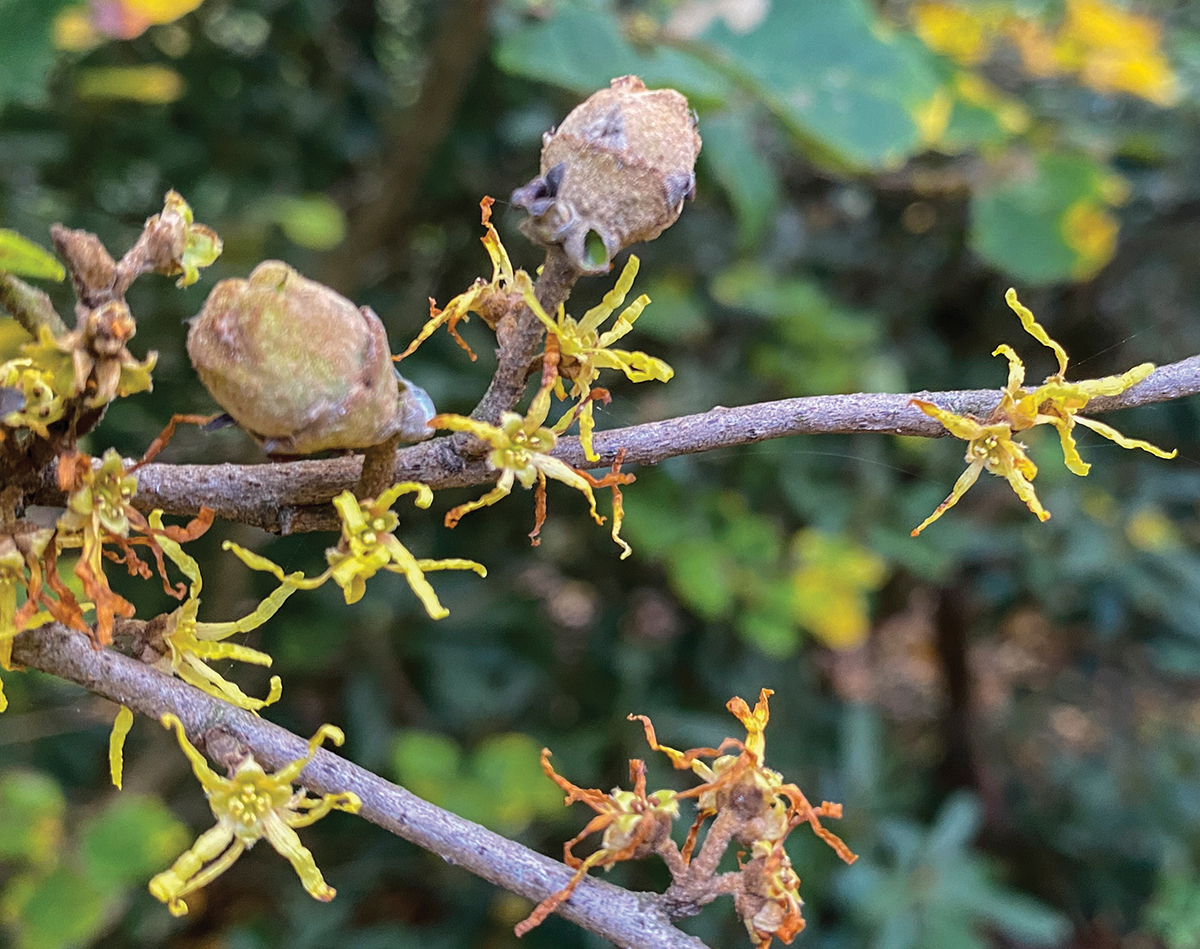
The best-known plant with the witch label is the late-blooming tree, witch hazel. Though the witch in its name most likely comes from an old Anglo-Saxon word, “wych,” meaning bending (from the tree’s small, gnarled shape or perhaps the bent flower petals), this native tree does have a number of traits that tend toward the supernatural. It blooms in late fall when most other plants are dead or dormant, starting in the mountains around the time of Halloween. Since there is a relative lack of pollinators this late in the year, it blooms for a long period, often well into December.
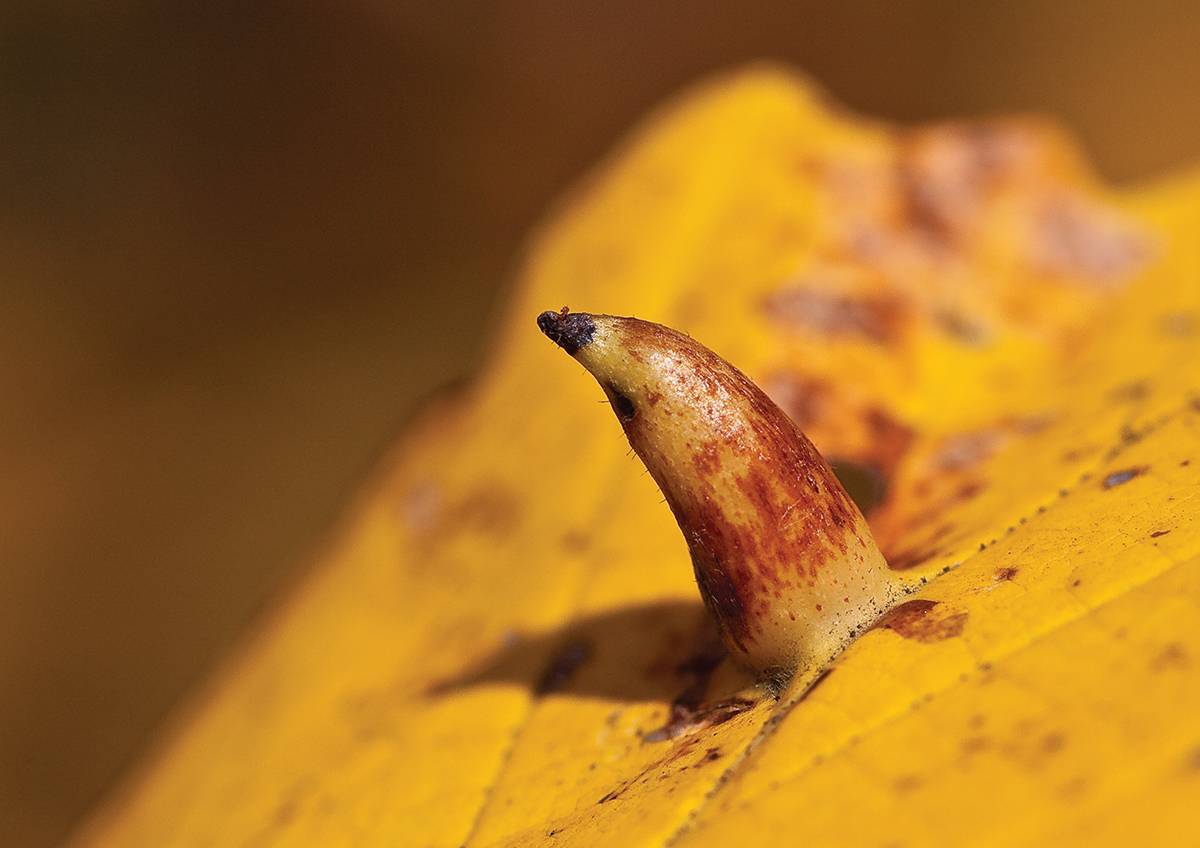
The bright yellow blooms are not your typical flower shape but rather stringy, curled petals resembling a batch of colorful spiders along the branches. The seed pods take a year to grow, and when ready, they erupt, shooting out hard black seeds to distances of up to 30 feet and creating a loud popping sound that can be startling to people nearby. And even the leaves can have tiny “witch hats”: these are galls (an abnormal outgrowth of plant tissue) caused, in this case, by witch hazel cone gall aphids. The galls are formed around a female aphid who injects an enzyme or hormone into the leaf, causing its abnormal growth. The hat-shaped gall provides both shelter and nutrients to the aphid and her offspring. The “witch hats” start out green but transition to yellow and then red later in the season. Uses of witch hazel include its use as a commercially available astringent obtained from the tannins in the bark and leaves. When applied to your skin, it gives a slight tingly feeling and is useful for helping with skin rashes.
A decidedly more mysterious use is the belief that a forked witch hazel branch can be used as a divining or dowsing rod to find water (and even valuable minerals like silver and gold). The dowser would slowly walk while holding the forked ends of the twig, one in each hand. If the desired object (most often groundwater) was detected, the single end of the branch would bend downwards, marking the spot. Though there is little scientific evidence supporting this practice, when I had our well dug years ago on our property, the worker employed a dowsing rod. He called it “water witching.” In the end, we did get water at 420 feet below the surface, so who knows.
There are plenty of other organisms with scary-sounding names, like assassin bug, cow killer, skull-cap, dead man’s fingers, and poison ivy. Perhaps they’ll inspire a Halloween costume this year? I hope you enjoy this spooky season, and may your children bring home plenty of tasty treats that you can enjoy on the sly, perhaps like another creature with a creepy name: the robber fly.

This article originally appeared in the October 2026 issue of WALTER magazine.