Ants act as predators, prey and decomposers, aerating and enriching soil health, too. They’re also crucial to helping plants survive
by Mike Dunn
Most people I know are not particularly fond of ants. That probably stems from experiences with the insects showing up as unwanted house guests, usually in the kitchen. Or perhaps you’ve had an unpleasant or painful encounter with a couple of our exotic invasive species, like fire ants or needle ants.
But most of our ants are out there doing their thing: pollinating plants; acting as predators, prey and decomposers; and enhancing soil health by aerating it and enriching it with nutrients through their waste. Usually, we don’t even notice them.
Years ago, I learned of another very important role ants play in our ecosystems: seed dispersal. There’s even a cool name for it, myrmecochory (pronounced mur-muh-koh-KOR-ee).
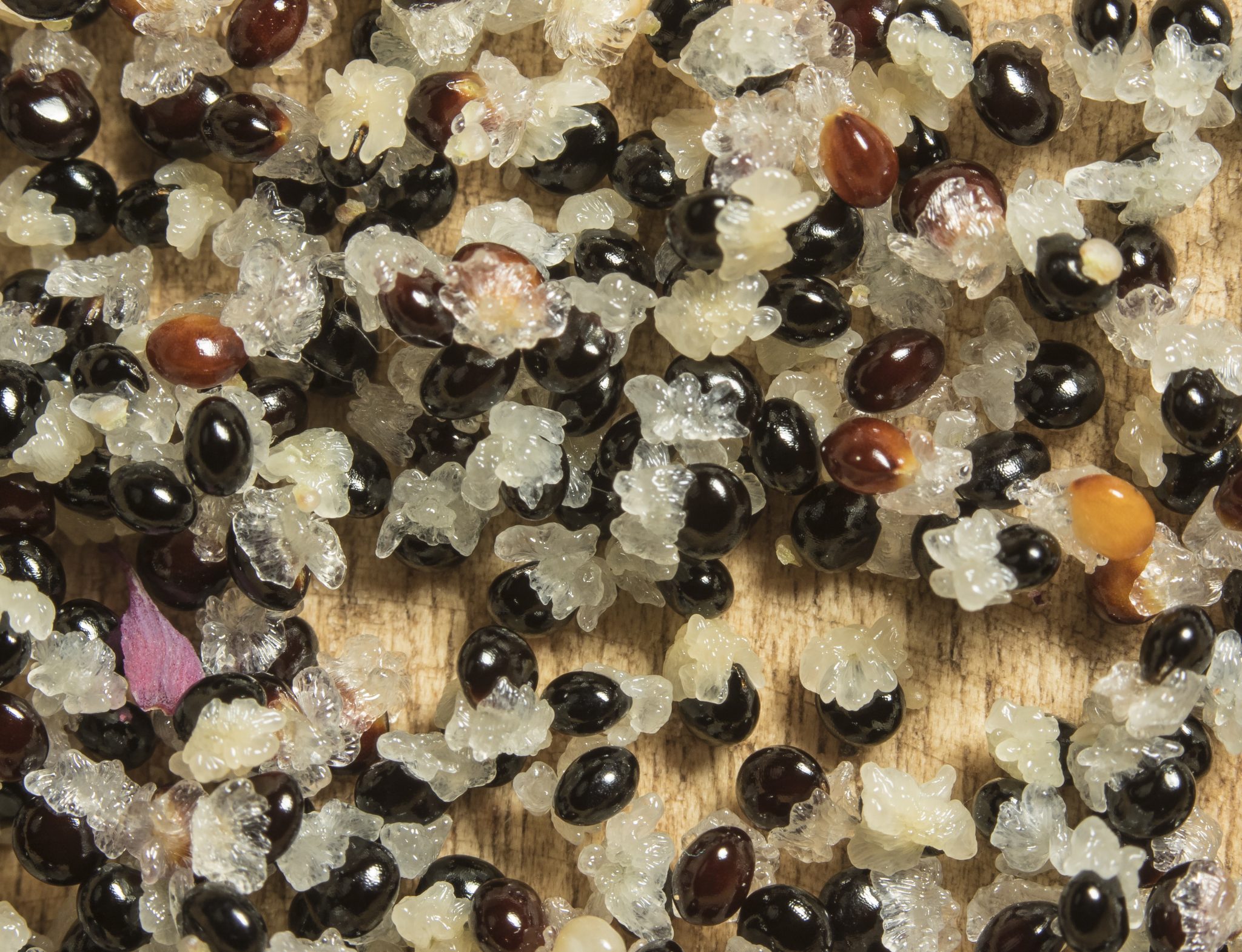
Many plants produce seeds with attached fleshy structures called elaiosomes (pronounced eh-LIE-uh-sohms) which are rich in lipids, proteins and carbohydrates.
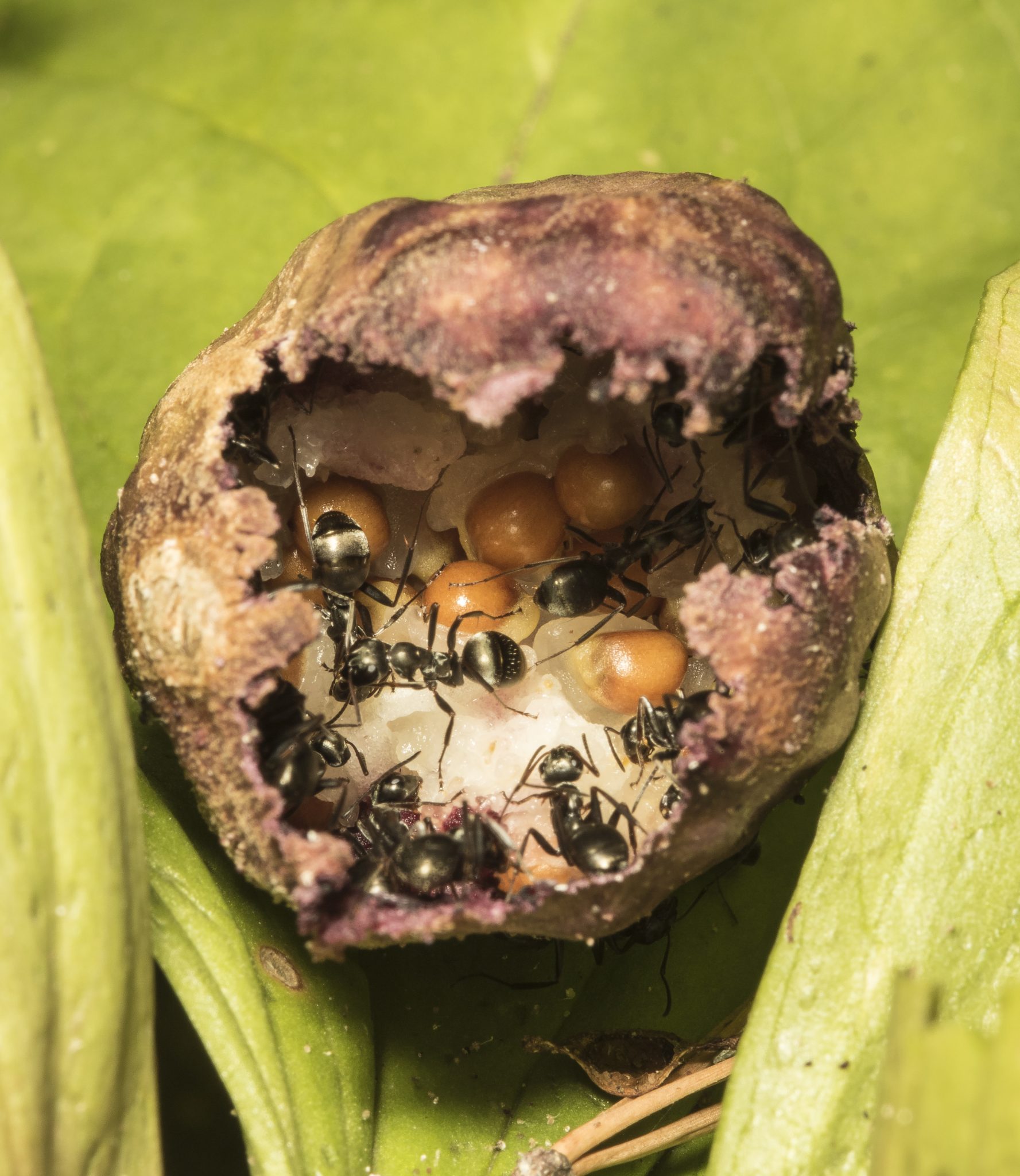
The elaiosome is a food reward that is fed to the ant larvae (or sometimes eaten by the adult ant) when it is taken back to the nest. But why would a plant expend precious energy to create a treat for an ant?
There are potentially numerous benefits to the plant. When ants carry seeds away from the parent plant, it may provide a better growth environment for new plants by reducing competition. Additionally, by quickly transporting the seed to its nest, the ants’ behavior reduces the time the seed may be exposed to various seed predators, like birds or mice. After the ants have removed the elaiosome for food, the seed is discarded into the ant “trash pile,” which is an underground chamber filled with plant remains, dead insects and ant waste products. This is a nutrient-rich environment ideal for seed germination.
The most intriguing research I have seen focuses on the reason the ants pick up the seed in the first place. It seems that elaiosomes are rich in fatty acids, including oleic acid. The oleic acid triggers a strange behavior in some species of ants. E.O. Wilson, the dean of ant researchers, showed that a dead ant starts emitting oleic acid about two to three days after its death. This is a signal to other ants to pick it up and carry it to their trash pile to help prevent the spread of disease in the nest. When Wilson added a drop of the “dead ant” acid to a live ant, it was quickly picked up and carried to the ant trash pile, in spite of its thrashing and obviously living qualities.
The oleic acid in elaiosomes seems to trigger the same carrying response, making the ants carry the seed/elaiosome combo back to the nest. They remove the nutrient-rich appendage as food and then take the seed itself to the trash pile.

We don’t fully understand the intricacies of this ant behavior, but it may mean that plants mimic an insect chemical in order to get ants to carry out their seed-dispersal tasks. It is a fascinating topic to ponder. Whatever the reason, myrmecochory is an incredibly important phenomenon. Estimates are that 30-40% of our spring-blooming woodland flowers rely on ants for seed dispersal and that elaiosomes occur in over 11,000 plant species worldwide!
After learning about ant seed dispersal, I wanted to photograph it. My first attempt was a few years ago in Raleigh. I had attended a plant rescue (when volunteers go to a site prior to development and remove plants, with permission) and planted a couple of trout lilies in the yard. I collected the seeds and laid them out on a piece of paper, hoping to see some ants come and collect them. I went inside to get my camera, but it seems I stayed in for a little too long, because when I returned a short while later, all the seeds were gone.
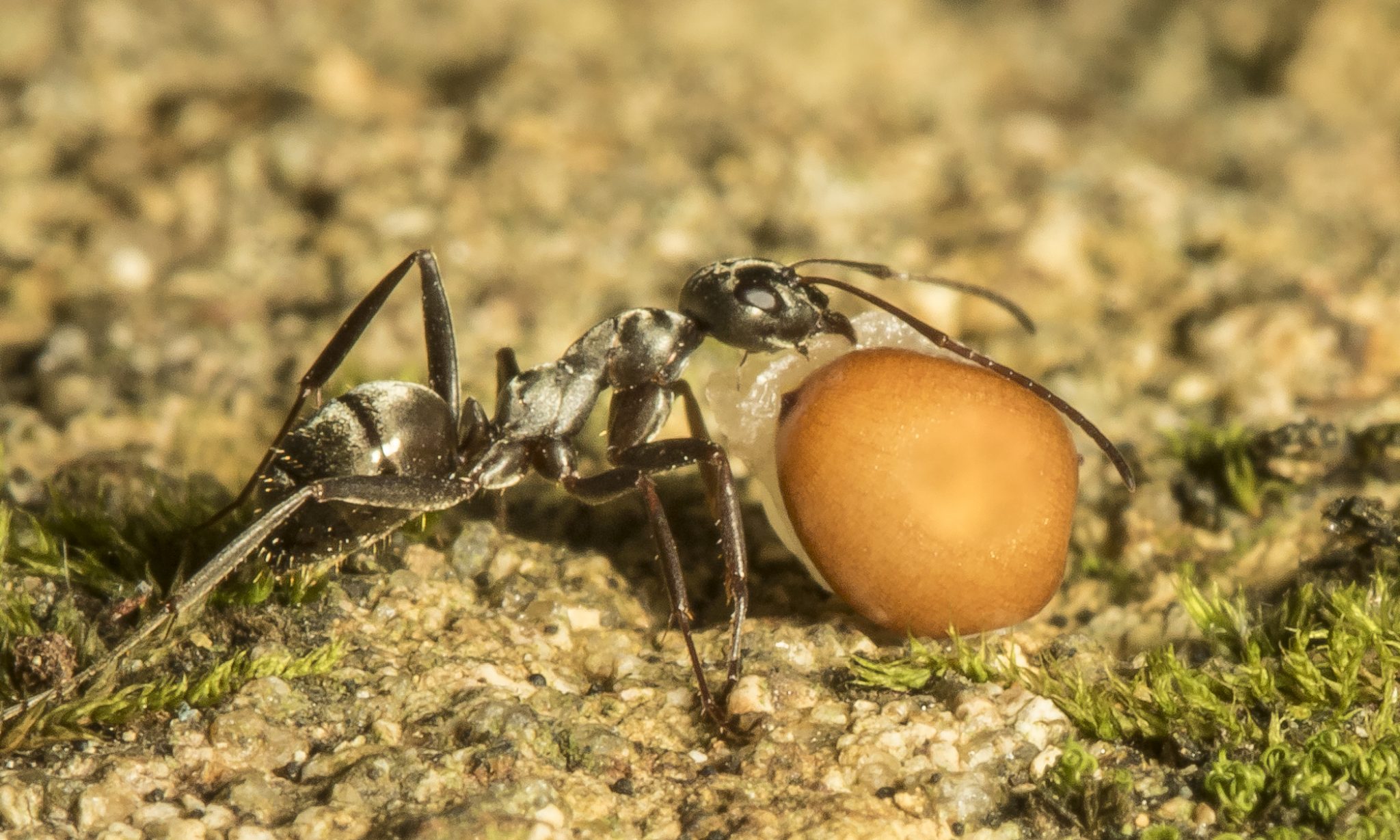
I finally got a photo on a trip to Great Smoky Mountains National Park. I stopped to photograph some wildflowers and noticed the distinctive leaves and seed pods of a clump of bloodroot.
I could see one of the pods had split open and there were only a couple of seeds visible inside, so I looked on the ground below.
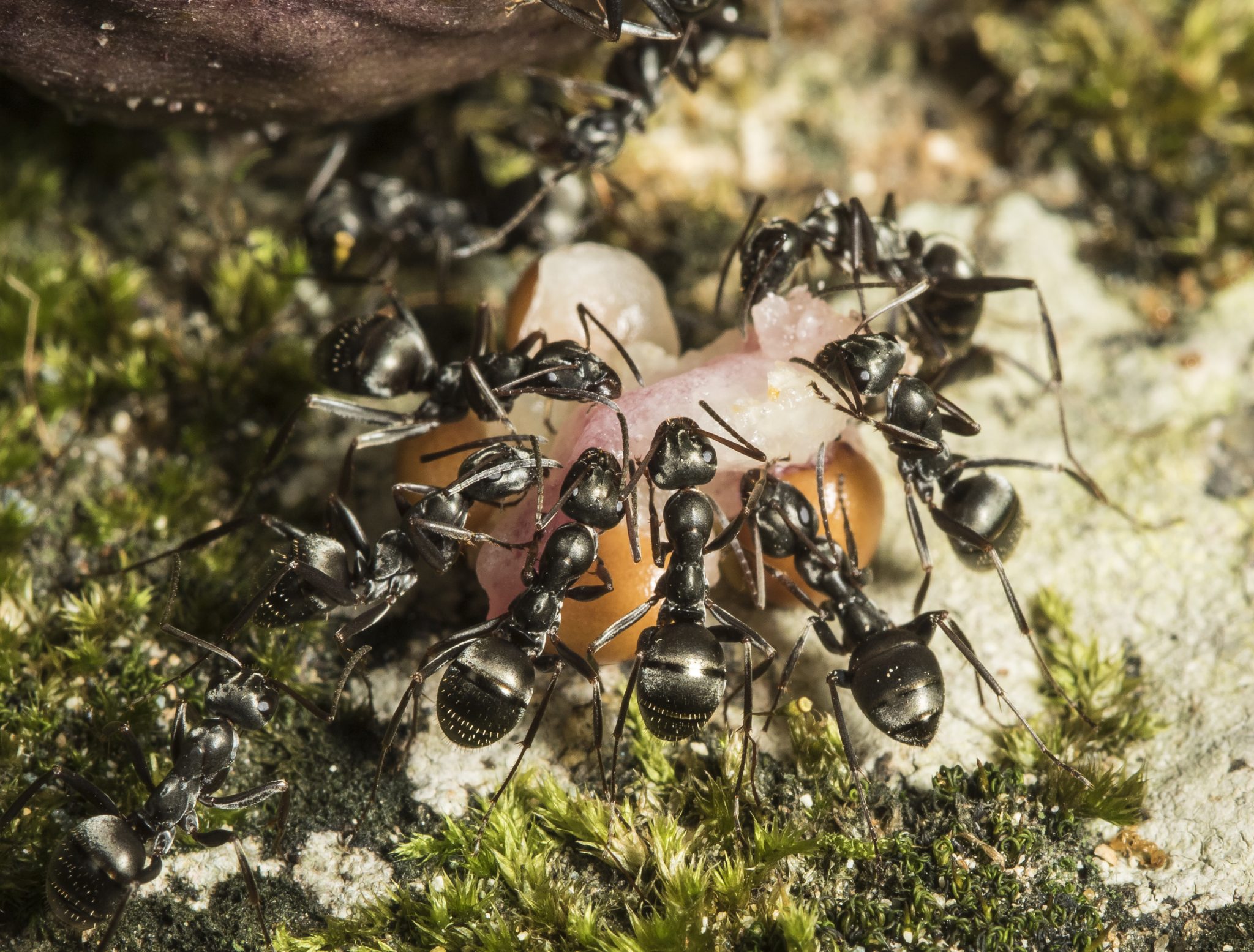
The bloodroot seed looked a bit odd, not much like the seeds you buy to plant in your yard — this seed looked like it had a polka-dot slug riding on it. That odd-looking thing was the elaiosome. I looked around the plants and found several ants crawling about. I waited only a few minutes before an ant found one of the seeds. The ant quickly picked up the seed and struggled to carry it off, presumably to its nest. It used the elaiosome as a handle (the slick coating of the seed would undoubtedly make it more difficult to carry without this fleshy appendage).
Then, one day when I was working at the North Carolina Botanical Garden, a coworker alerted me to an ant frenzy on a trillium plant. It was after closing time, but I spent the next hour watching a group of ants dismantle a seed pod and carry off the lipid-rich prizes to their underground nest about 6 feet away. The seed pod was cracked open and ants were tugging at seeds inside. When one was freed, one or two ants would struggle to get it out of the pod. Then it was carried to the nest, using a similar path in each case, which included a drop off of a large rock. The ant would go to the edge, pause and then simply fall off the rock, holding onto the elaiosome!
This behavior happens every spring and summer in our yard in Chatham County, where we have a variety of other native wildflowers that produce elaiosomes including hepatica, squirrel corn, bleeding heart, spring beauty, wood poppy, wild ginger and violets. Many of these plants require a few years after germinating to produce their first flowers. We have observed the spread of some of our favorite plants, like trout lilies and bloodroot, due to the activities of the ant seed dispersers. We now have patches of some of these gorgeous wildflowers several feet away from where I originally planted them, in areas that I presume were the locations of ant nests.
So now we give thanks that we have ants in our plants. There’s a lot going on out there that we are just beginning to understand. All the more reason to plant some native plants and get outside to observe your wild neighbors.

This article originally appeared in the June 2026 issue of WALTER magazine.