Once an almost-decimated population in North Carolina, these deer are considered a conservation success — but they can be a nuisance
by Mike Dunn

My introduction to white-tailed deer came as a young teen going hunting with my father in Virginia. Though Dad was an excellent hunter, I never killed a deer, perhaps because I just couldn’t bring myself to pull the trigger. But now I understand the need for hunting as a means of deer population management.
When colonists first arrived, white-tailed deer were quite common, a staple of Native American diet and clothing needs. But large-scale changes in the landscape soon followed and that, combined with overhunting, led to deer being virtually extirpated in many areas of the South. Populations in North Carolina dwindled to around 10,000 deer in the entire state in the early 1900s, a mere 1% of what they may have been in pre-colonial times. Alarmed by this decline, laws were passed and hunting regulations enacted to try to preserve the herds. That effort became a huge conservation success story as the population of deer in the state is now estimated at about 1 million.
I’ve developed an ambivalent relationship with local deer herd. I enjoy seeing them in the woods and catching their behaviors on the trail cameras, but I’ve seen their impact on the forest and on our yard. A couple of years after moving in, I erected a 7-foot tall plastic mesh deer fence surrounding about an acre around the house. That gave the deer access to our remaining 13 acres, so I figured it was a fair deal. But the deer quickly found they could crawl under the fence in a few places due to the uneven terrain. That prompted me to add chicken wire and logs along the bottom of the fence. (Even though deer can clear 7 feet, it seems they prefer to go under a fence — though I did see a deer jump over one time.)
Our wildflowers and shrubs prospered within the fence with only an occasional breach. But last year while we were on an extended vacation, a tree fell across the fence. When we returned, it looked like someone had used a weed eater on all of our gardens. It was heartbreaking, but they eventually grew back.
Vegetation on the other 13 acres has not fared as well. Wildflowers that were scattered across the property in the mid-1990s disappeared within a decade. Deer, when overpopulated, can create a highly diminished forest. When a large tree falls in our woods now, there are no saplings to replace it.
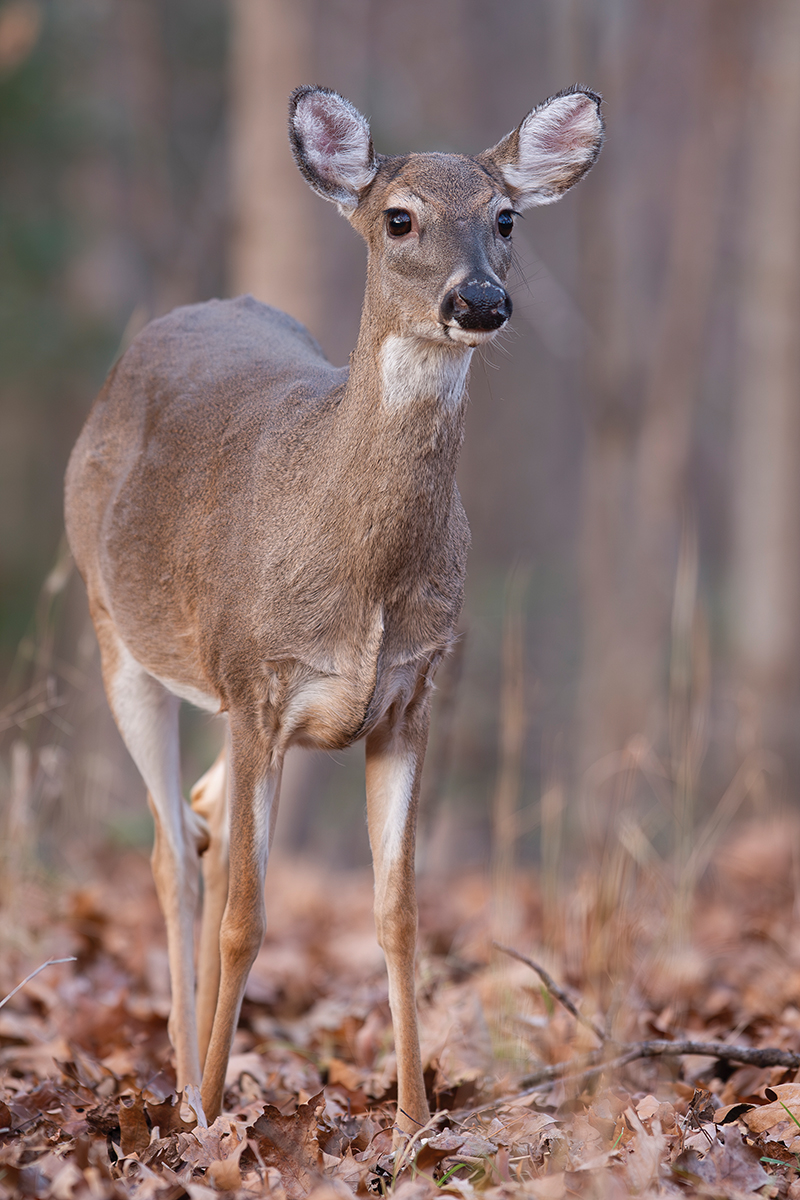
Please don’t misunderstand me: I am glad deer are on our property. Deer are beautiful and exhibit lots of fascinating behaviors. The change in fur color twice each year is particularly striking as they shed their summer reddish-brown coat to the better winter camouflage of gray-brown fur. The winter coat provides greater insulation due to its long hollow guard hairs (which trap air to create an insulating layer) and dense underfur.
Mating season for deer (called the rut) in our area peaks in November. As days begin to shorten, the males (bucks) produce more testosterone, leading to more aggressive behavior as they seek out receptive females (called does). Deer have their own brand of “social media”: Bucks will rub the bark off saplings (especially aromatic species like red cedar and sassafras) leaving behind a visual cue of their presence. They also deposit scent on the trees from glands located on the forehead and near the eyes.
A buck also creates scrapes by rubbing their antlers on a low overhanging tree limb, often biting the branches and breaking them. He will then paw at the ground underneath, scraping down to bare soil. As a final message, he will urinate in the spot, often rubbing together the glands located on his rear legs as he urinates over them. All this to impress the ladies and claim his turf.
After the rut, similar-sized males will often form small bachelor herds and get along as if nothing had happened a few weeks earlier. Their testosterone levels drop, activating specialized cells called osteoclasts. These weaken the connection of the antlers, which will eventually drop off (usually in February or early March).
They soon start growing their next set of antlers in preparation for another year of the rut. The growing antlers are covered in a blood-rich membrane known as velvet. During the first few months of growth, the velvet-covered antlers grow rapidly, often more than a quarter of an inch per day, making antler the fastest growing bone tissue in the mammal world. Come late summer or early fall, bucks start rubbing off the velvet until the hardened white antlers are uncovered.
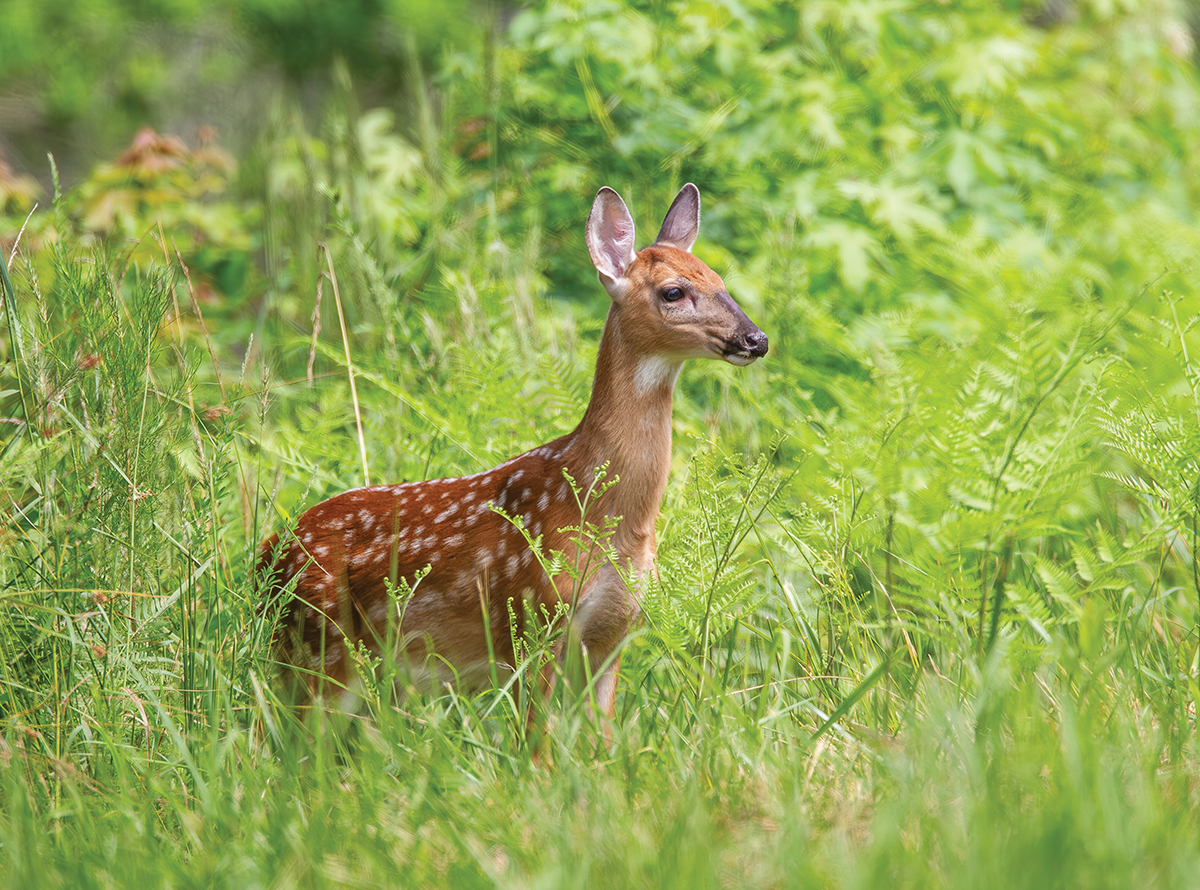
Female deer give birth to one or two fawns in late spring. The young are reddish-brown with white spots that help camouflage them in the dappled sunlight of the forest. They have almost no scent and will lay still while their mother goes off to feed. If you find one, it is best to leave it alone, as its mother will soon return to nurse it.
Deer feed on a variety of plants (as many gardeners painfully know) but one of their favorite foods are acorns. My trail camera videos show them loudly crunching each acorn, dropping out broken pieces of shell, and then searching for the next nutty morsel.
One other behavior captured on our trail cameras surprised me. Deer can be very playful, and not just the fawns. They seem to particularly like to play in puddles and creeks. We have recorded deer getting into the water, looking around, then scooting backwards, pawing at the water and even sticking their faces in it. Then they often contort their body and leap into the air, twisting around and doing a mad dash before pausing and repeating. This can go one for several minutes, often with another deer joining in the fun. Who knew?

This article originally appeared in the November 2025 issue of WALTER magazine.