These easily recognized wild mammals are ubiquitous in the Piedmont, both in undeveloped lands and urban areas
by Mike Dunn
I have several trail cameras on our property in Chatham County, and the three most common critters I see on them are gray squirrels, white-tailed deer and raccoons. The latter are mostly seen at night, although I do get an occasional dawn or dusk capture.
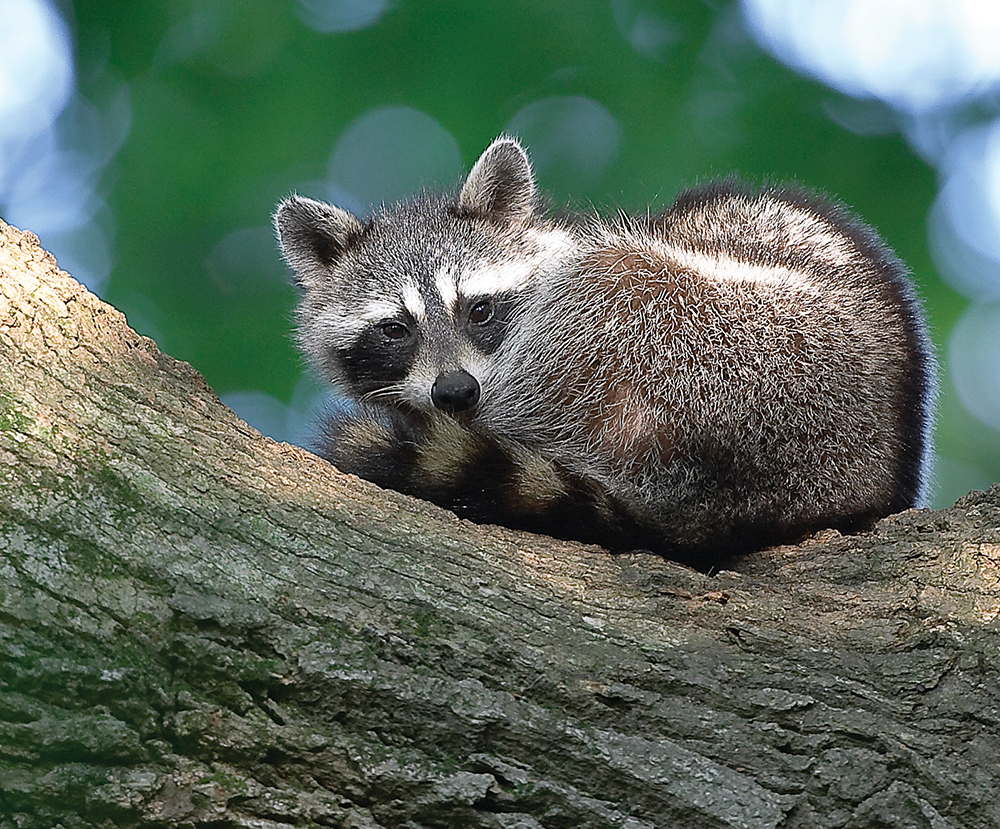
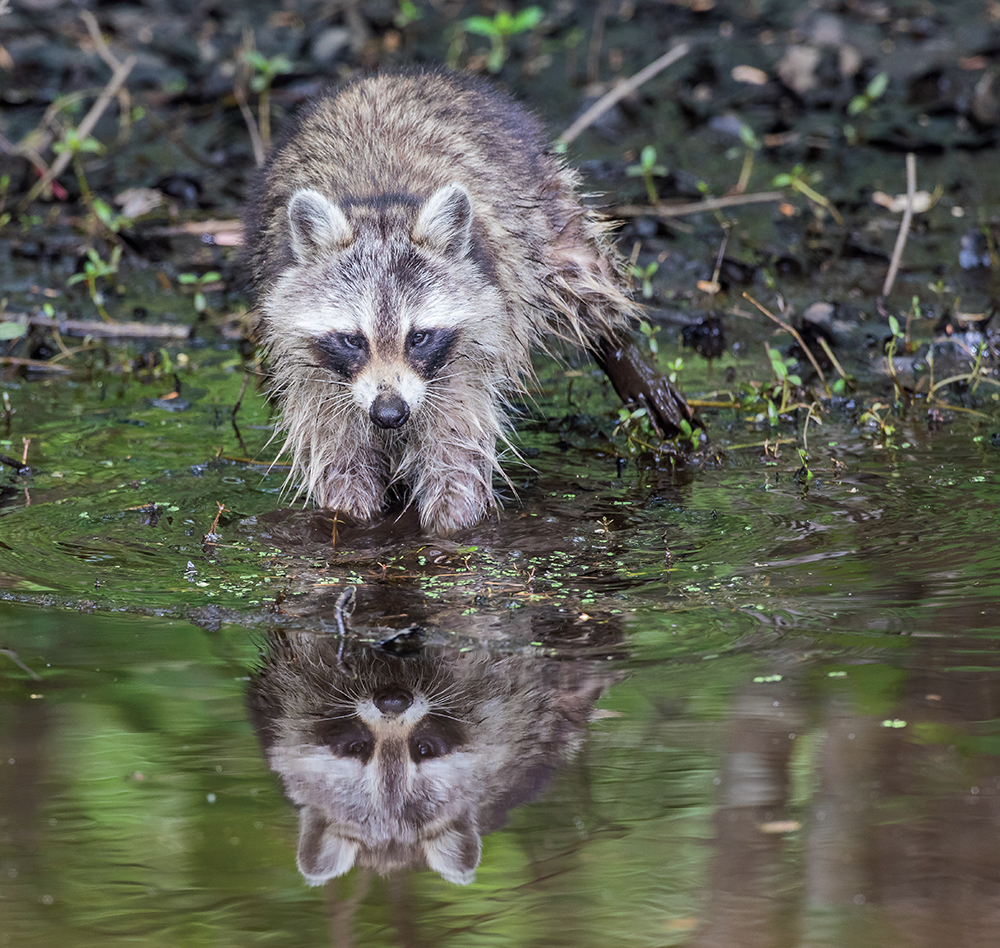
Raccoons are certainly one of the most easily recognized wild mammals. Distinguishing features include brownish-gray fur, a black mask across their face and a ringed tail. They weigh anywhere from 10 to 25 pounds as adults. Their longer hind legs give them a noticeable hunched-over appearance when walking. Raccoons are widespread in our state and occur in both wild lands and urban areas. You may hear them at night making a variety of sounds, including hisses, screams and barks. These so-called masked bandits are intelligent and opportunistic creatures, to be sure, and they have extremely dexterous front paws similar to small hands. They use those long “fingers” to grasp and manipulate their food, and they can even open containers and unlock latches.
Raccoons frequent the edges of creeks and ponds searching for prey such as frogs, crayfish or other invertebrates. They also eat a lot of plant materials, especially fruits. Many people think that raccoons wash their food before eating, as you may see what looks like them rubbing their paws together underwater as they forage. But studies have shown that the bare skin on their front paws is extremely sensitive to touch and that being wet actually increases that nerve sensitivity, enabling a raccoon to better distinguish food items even in darkness.
Their scientific name, Procyon lotor, refers to this behavior and means “before-dog washer” (raccoons were originally thought to be related to dogs). The common name is believed to be derived from an Algonquian word that means “he who scratches with his hands.”
My trail cameras often show raccoons using their front paws both in water and on dry land. In water, they will walk along feeling along the bottom and occasionally grabbing something and bringing it up to eat. On land, the cameras show them walking through the leaves, feeling for anything edible. They typically leave a meandering path of overturned leaves as a telltale sign of this practice.
We have a raccoon den located in a tree just outside our deer fence. It is situated in a large tulip poplar with a hollow crevice going up the side about 10 feet and a couple of holes high up on the trunk. There is a cedar snag about 4 inches in diameter leaning up against the trunk, and when I put a camera on this tree, I was surprised to see that the raccoons almost always climb the cedar snag to get higher up on the tree rather than just climbing the tree trunk. At night, it becomes a busy cedar ladder with raccoons typically coming and going several times.
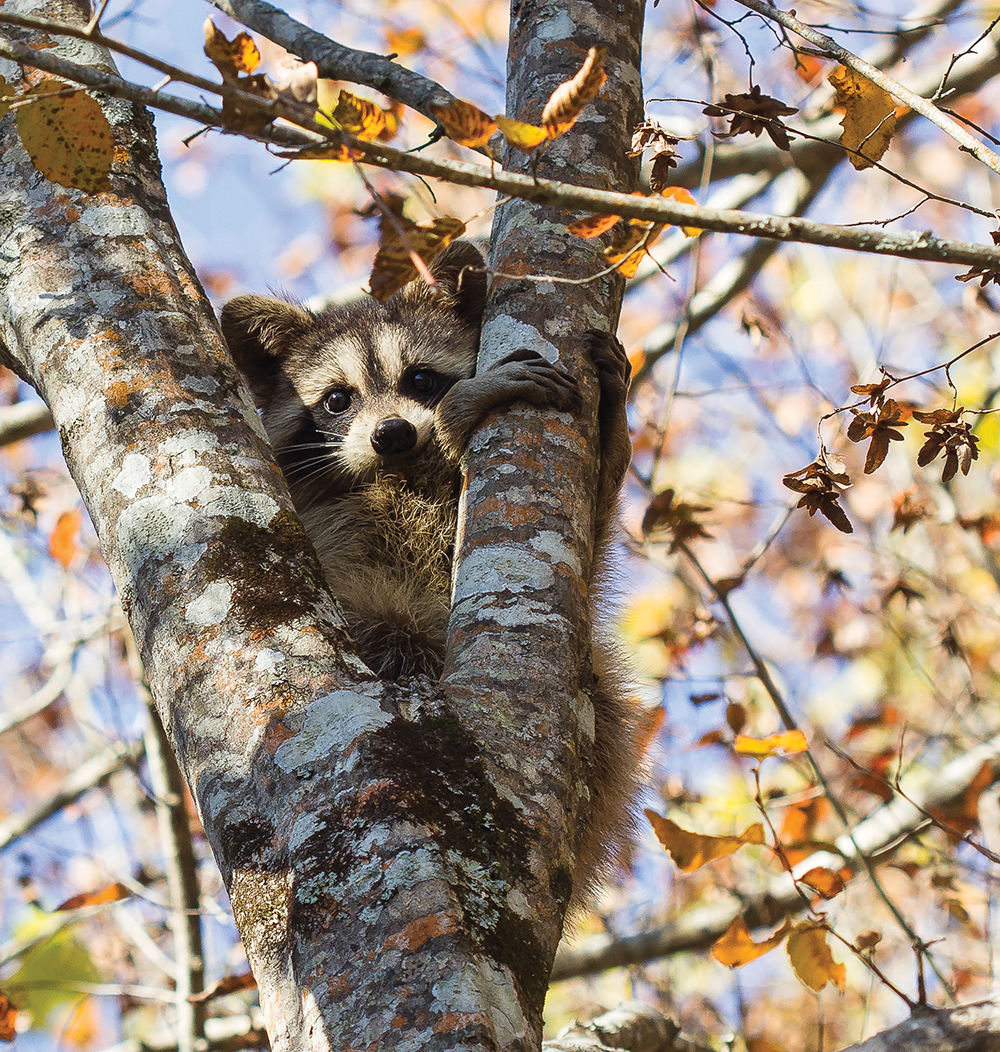
Early one summer, I was out in the yard and heard some squealing coming from that direction. I walked over and found two very tiny raccoons inside the hollow crevice of the tree. It turned out that the mother raccoon was moving her young to another den site down the slope and was carrying them one at a time — and the ones waiting their turn were not happy being left alone. This is typical behavior if the original den is disturbed or if she wants to get them to a den site closer to the ground as they start to mature and explore. I grabbed a couple of photos of the young and then scurried back to the house to let her complete her moves.
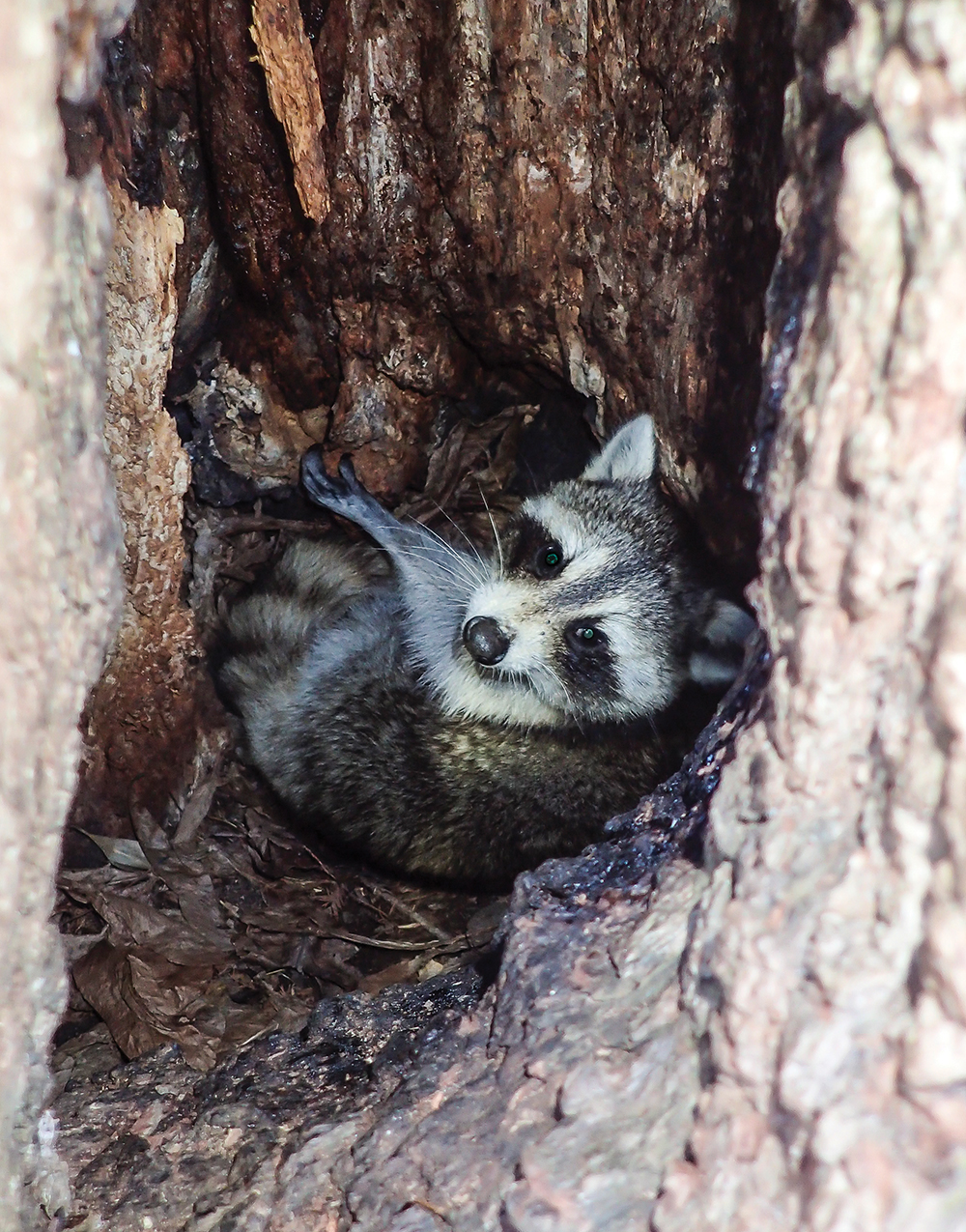
The other place I regularly get raccoon footage is on a camera overlooking a couple of huge fallen trees over our wet-weather stream. Raccoons (and, in fact, many other animals) use such logs as forest highways and may cross them multiple times in a night. When walking through a woodland, I often keep an eye out for holes in trees, a hollow stump or just big horizontal branches as raccoons use such areas as snoozing spots in the daytime.
When I was doing educator workshops at the North Carolina Museum of Natural Sciences and we were traveling on refuge dirt roads in Eastern North Carolina, I always encouraged the participants to keep an eye out for sleeping raccoons. One teacher that had been to a few workshops asked if we actually ever saw any. I said yes — and, as if on cue, she spotted not one, but two raccoons sleeping on tree limbs within the next 5 minutes. I always loved it when the animals helped me out.
Our most recent raccoon encounter was while canoe camping in one of our favorite locations in our state, the Roanoke River. We set up camp on a platform surrounded by water and tupelo gum and bald cypress trees. Some of the gum trees had been cut decades ago and new trees had grown up out of the old stumps, creating a perfect bowl between the new trunks.
Melissa got out of the tent that morning and spotted the back of a curled-up raccoon in one of those tupelo gum “bowls,” just 30 feet from our platform. We watched it as we prepared breakfast. The raccoon occasionally would shift position and curl in tighter, tucking its head as if to say, “Can you guys be quiet? I’m trying to sleep here!” Eventually, the raccoon woke up, did some grooming, climbed down the tree and swam off into the swamp.
Melissa mentioned that she thought she heard something scurrying around on the platform during the night, but it appeared nothing had been disturbed, and we have never had any issues with critters on the platforms in all our years of camping here. But when we got home, I noticed a muddy paw print on our plastic tub of kitchen supplies, indicating that our furry friend had indeed paid us a visit. Fortunately, he wasn’t able to open anything!
While raccoons are extremely cute and interesting to watch, you don’t want to encourage them to lose their fear of humans and to become too comfortable around your home or camp. They can quickly learn to take advantage of any openings you provide and may raid garbage cans and pet food dishes left outside. They’ve even been known to come into houses through a doggie door! We have had a raccoon’s hand-like paw prints on our glass kitchen door a few times as they check out what’s going on in their neighborhood. So, please don’t feed raccoons, and let’s help these masked bandits stay wild.

This article originally appeared in the September 2025 issue of WALTER magazine.