These native plants have a delightful taste and plenty of benefits — and the season to find pawpaws is here
Words and photography by Mike Dunn
Perhaps you have heard these lines in a chorus from an old American folk song…
Picking up pawpaws, put ‘em in your pocket.
Picking up pawpaws, put ‘em in your pocket.
Way down yonder in the pawpaw patch.
But I’m betting there are many people that don’t know what a pawpaw is (other than that man that lives with your mawmaw).
Pawpaw is actually one of my favorite native trees, though I feel like it was more appreciated in our past than it is today. The first written record of pawpaw that I know of was from the De Soto expedition in 1541. The Spanish explorer recorded Native Americans cultivating this tree in the southeast for their edible fruits. Lewis and Clark also wrote about it in their travels. On their return trip, while moving through what is now Missouri, the men ran low on provisions and subsisted heavily on this native fruit. Reportedly it was the favorite dessert of George Washington, and Thomas Jefferson liked it so much he planted it in his gardens at Monticello.
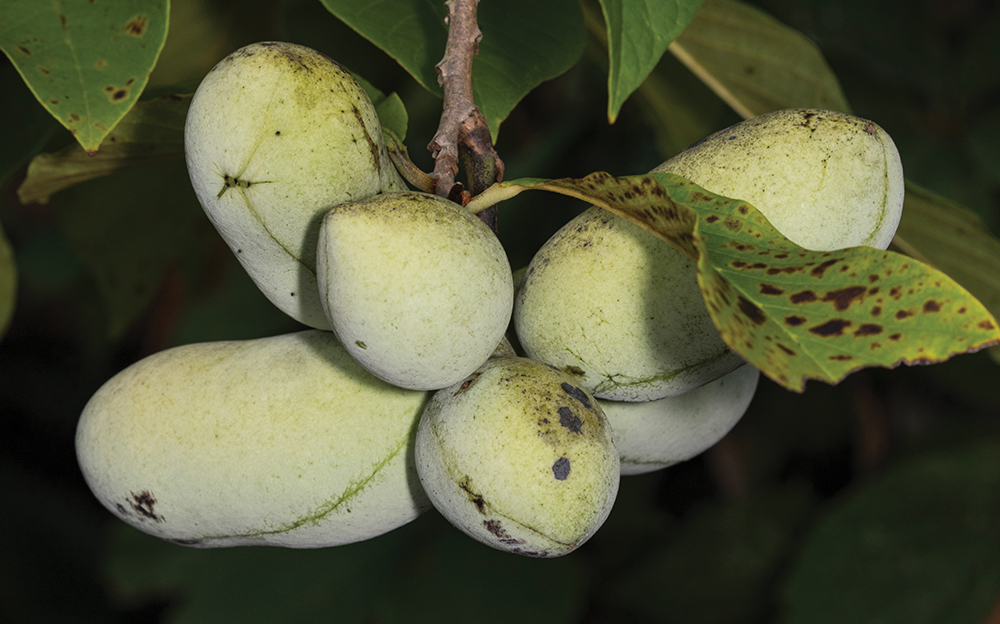
The taste of a pawpaw is described as custard-like with the flavors of mango, banana and passionfruit mixed together. It is the largest fruit native to the United States. The fruit is not very shelf stable, which is why you probably don’t see pawpaws in your local supermarket, although I have found some at a few farmer’s markets. The fruit ripens in late August and early September and is ready to eat when it gets a little soft. But you have to hurry and get them before the local opossums, squirrels or raccoons do! They are also a favorite of black bears. Every fruit-bearing pawpaw tree at my favorite bear-heavy wildlife refuge, Pocosin Lakes in eastern North Carolina, has plenty of bear claw marks to prove that.
This tasty fruit is having a revival, it seems — it can now be found as an ingredient in jams, ice cream and even beer. I had my first taste of pawpaw beer a few years ago at Fullsteam Brewery in Durham, which specializes in beers containing locally grown ingredients, and it was delicious. One source for their pawpaw fruit is Full of Life Farms in Chatham County, a large pawpaw farm started by Wynn Dinnsen with over 200 trees. Since his passing in 2022, the farm has been maintained by a dedicated group of volunteers and pawpaw enthusiasts. And there are plenty of fans across the country as evidenced by the numerous pawpaw festivals. You can find out where and when to attend a festival at the Project Pawpaw website (projectpawpaw.com), which also has lots of growing tips. There is even a National Pawpaw Day on the third Thursday of September to honor “America’s forgotten fruit.”
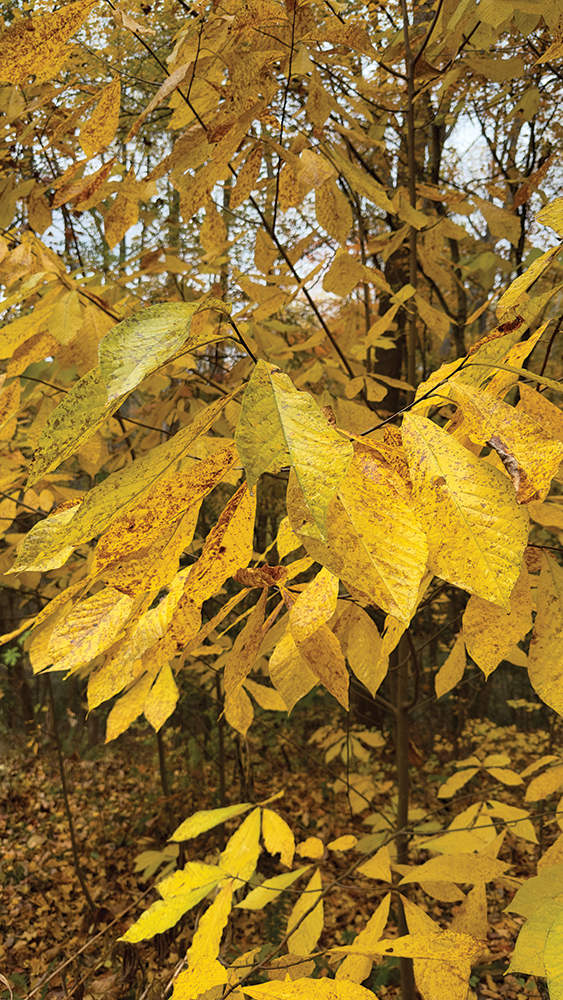
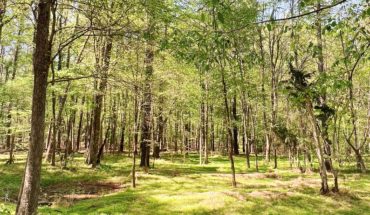
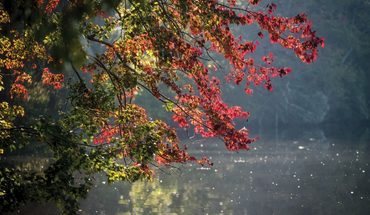
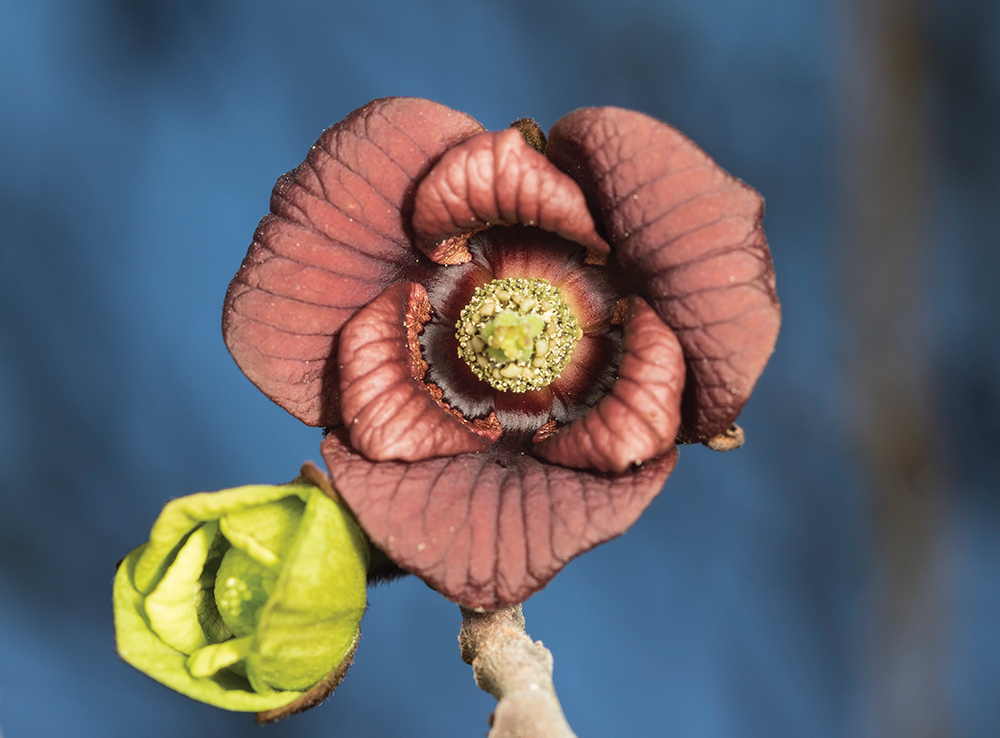
So, how do you recognize a pawpaw in the woods? It is a small understory tree (rarely exceeding 30 ft in height) that grows in the rich soil found in areas like lakeshores and river bottoms. Pawpaws are native to all 100 counties in North Carolina. When you find one, you tend to find several, since they sprout new shoots from their roots. The bark is grayish and relatively smooth with some small warts. Pawpaw trees have broad elliptical leaves that turn a beautiful yellow in fall. The dark maroon flowers that appear in April are three-lobed (hence the species name triloba) and hang down from a twig. They have a slightly unpleasant aroma and are pollinated primarily by flies and beetles that are attracted to decaying flesh. Pollination success is generally poor, so some pawpaw farmers hang dead fish in their orchards to attract carrion-feeding insects that might then pollinate the flowers.
Our property in Chatham County has a stand of pawpaw along our creek bottom, and we planted a few up close to the house to enjoy the fruit and fall color (they do grow well in normal garden soil, too). If you have read some of my previous columns, you know I am very fond of caterpillars, which is another reason we planted a few trees in our yard. Pawpaw is the primary host plant for one of the most beautiful butterflies in North Carolina, the Zebra swallowtail. In fact, if you ever see one flying about, odds are there is a pawpaw tree within a quarter mile. There are also several species of moths that lay their eggs on the leaves of this tree, including the Pawpaw sphinx and Tulip-tree beauty. One other value of this species as a landscape plant is that the bark and leaves contain compounds that make them unpalatable to most mammals, meaning those deer that eat all of your other yard plants will tend to leave this one alone. The chemicals (called acetogenins) are also being studied for use as a natural pesticide and for their potential anti-tumor properties in cancer research.
So, you see, there is a lot to love about pawpaws. Check out some local native plant nurseries for seedlings, and you can start your own pawpaw patch. And for the average homeowner, no dead fish are required.

This article was originally published in the September 2026 issue of WALTER Magazine.